Supreme Court Term 2025-2026
We’re breaking down the cases we've asked the court to consider this term.
Latest Case Updates
Ongoing
Updated February 25, 2026
Ongoing
Updated February 18, 2026
Ongoing
Updated January 26, 2026
Ongoing
Updated January 16, 2026
Featured
Missouri
Feb 2026
Voting Rights
Missouri v. U.S. Department of Commerce
A coalition of civil rights and immigrant-rights organizations has moved to intervene as defendants in a lawsuit that threatens to dismantle the Constitution’s long-standing requirement that the decennial census count all people living in the United States. Missouri asks the court to exclude undocumented immigrants and people living in the country on temporary visas from the census count used to determine congressional representation—an unprecedented move that would upend more than two centuries of constitutional practice.
Mississippi
Dec 2025
Voting Rights
White v. Mississippi State Board of Elections
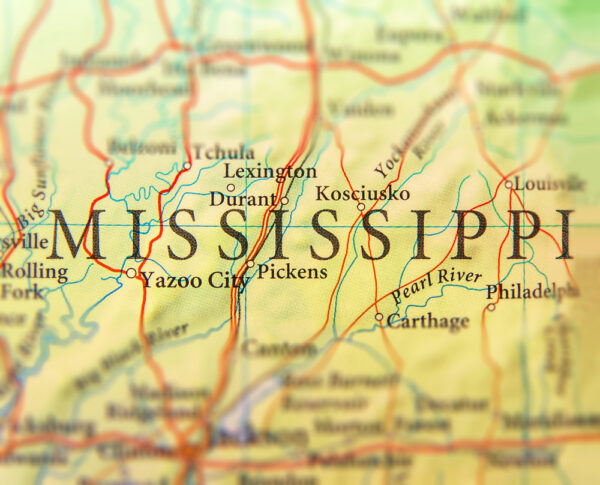
District lines used to elect Mississippi’s Supreme Court have gone unchanged for more than 35 years. We’re suing because the current lines crack the Mississippi Delta and dilute the voting strength of Black Mississippians in state Supreme Court elections, in violation of the Voting Rights Act.
Court Case
Dec 2025
National Security
Human Rights
FOIA Case Seeking the Trump Administration’s Legal Justification for Deadly Boat Strikes
The Department of Justice’s Office of Legal Counsel (“OLC”) authored a legal opinion that reportedly claims to justify the Trump administration’s illegal lethal strikes on civilians in boats in the Caribbean Sea and eastern Pacific Ocean. Media reports indicate that, in addition to claiming that the strikes are lawful acts in an alleged “armed conflict” with unspecified drug cartels, the OLC opinion also purports to immunize personnel who authorized or took part in the strikes from future criminal prosecution. Because the public deserves to know how our government is justifying these illegal strikes, and why they think the people who carried them out should not be held accountable, the ACLU is seeking immediate release of the OLC legal opinion and related documents pursuant to the Freedom of Information Act.
U.S. Supreme Court
Dec 2025
Immigrants' Rights
Barbara v. Donald J. Trump
President Trump is attempting to undermine the promise of birthright citizenship to children born on U.S. soil. But the ACLU and partners are fighting to protect the rights of citizens that are plainly stated in the Constitution, federal statute, and reaffirmed by the Supreme Court for more than a century. We’re arguing against the Trump administration in the Supreme Court and are confident we will win.
U.S. Supreme Court
Nov 2025
Voting Rights
Racial Justice
Allen v. Milligan
Whether Alabama’s congressional districts violate Section 2 of the Voting Rights Act because they discriminate against Black voters. We succeeded in winning a new map for 2024 elections which, for the first time, has two congressional district that provide Black voters a fair opportunity to elect candidates of their choosing despite multiple attempts by Alabama to stop us at the Supreme Court. Despite this win, Alabama is still defending its discriminatory map, and a trial was held in February 2025 to determine the map for the rest of the decade.
In May 2025, a federal court ruled that Alabama's 2023 congressional map both violates Section 2 of the Voting Rights Act and was enacted by the Alabama Legislature with racially discriminatory intent.
Washington, D.C.
Oct 2025
Voting Rights
League of Women Voters Education Fund v. Trump
On March 25, 2025, in a sweeping and unprecedented Executive Order, President Trump attempted to usurp the power to regulate federal elections from Congress and the States. Among other things, the Executive Order directs the Election Assistance Commission—an agency that Congress specifically established to be bipartisan and independent—to require voters to show a passport or other citizenship documentation in order to register to vote in federal elections. If implemented, the Executive Order would threaten the ability of millions of eligible Americans to register and vote and upend the administration of federal elections.
On behalf of leading voter registration organizations and advocacy organizations, the ACLU and co-counsel filed a lawsuit to block the Executive Order as an unconstitutional power grab.
U.S. Supreme Court
Oct 2025
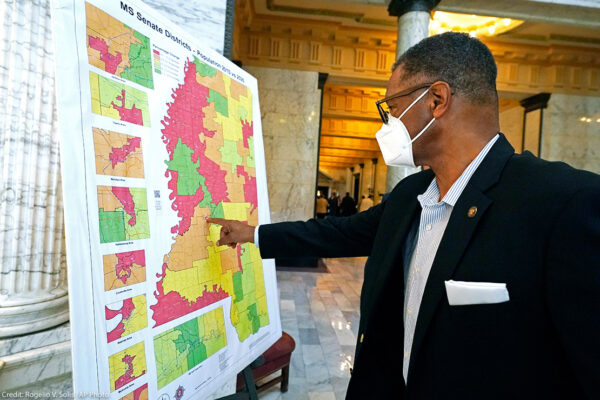
Voting Rights
State Board of Election Commissioners v. Mississippi State Conference of the NAACP
Mississippi has a growing Black population, which is already the largest Black population percentage of any state in the country. Yet. Black Mississippians continue to be significantly under-represented in the state legislature, as Mississippi’s latest districting maps fail to reflect the reality of the state’s changing demographics. During the 2022 redistricting process, the Mississippi legislature refused to create any new districts where Black voters have a chance to elect their preferred representative. The current district lines therefore dilute the voting power of Black Mississippians and continue to deprive them of political representation that is responsive to their needs and concerns, including severe disparities in education and healthcare.
U.S. Supreme Court
Oct 2025

Voting Rights
Louisiana v. Callais (Callais v. Landry)
Whether the congressional map Louisiana adopted to cure a Voting Rights Act violation in Robinson v. Ardoin is itself unlawful as a gerrymander.
Missouri
Sep 2025
Voting Rights
Wise v. Missouri
In unprecedented fashion, the State of Missouri has redrawn the district lines used for electing members of Congress for a second time this decade. These new district lines are gerrymandered and will harm political representation for all Missourians, particularly Black residents in Kansas City, who have been divided along racial lines.
All Cases
1,680 Court Cases

Alabama
May 2018
Reproductive Freedom
West Alabama Women’s Center v. Miller
A federal appeals court struck down Alabama’s law prohibiting physicians from performing a medically proven method of abortion care that some women need.
Explore case
Alabama
May 2018
Reproductive Freedom
West Alabama Women’s Center v. Miller
A federal appeals court struck down Alabama’s law prohibiting physicians from performing a medically proven method of abortion care that some women need.
California
May 2018
Immigrants' Rights
United States of America v. State of California
In March 2017, the Trump administration filed a lawsuit challenging California’s sanctuary laws. The American Civil Liberties Union and co-counsel have moved to intervene in the case to defend the California Values Act, which limits California’s participation in the deportation dragnet.
Explore case
California
May 2018
Immigrants' Rights
United States of America v. State of California
In March 2017, the Trump administration filed a lawsuit challenging California’s sanctuary laws. The American Civil Liberties Union and co-counsel have moved to intervene in the case to defend the California Values Act, which limits California’s participation in the deportation dragnet.
Court Case
May 2018
Women's Rights
Racial Justice
NFHA v. Carson
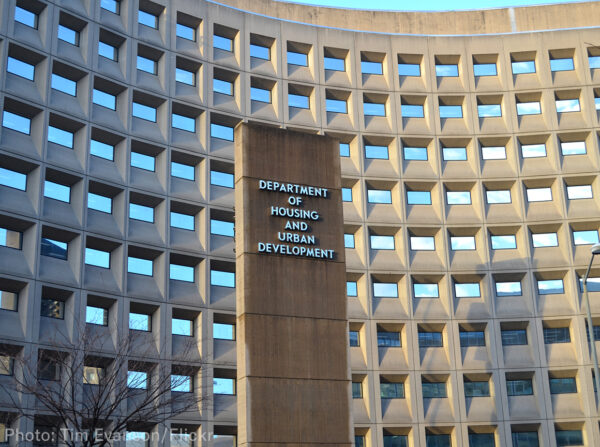
The American Civil Liberties Union, along with a coalition of civil rights law firms, represent the National Fair Housing Alliance, Texas Low Income Housing Information Service, and Texas Appleseed in a federal lawsuit challenging HUD Secretary Ben Carson’s January 2018 decision to delay key portions of the Affirmatively Furthering Fair Housing (AFFH) Rule. The suit defends the AFFH Rule as a crucial tool for dismantling racial segregation and fair housing barriers for people of color, survivors of gender-based violence, people with disabilities, and low-income people.
Explore case
Court Case
May 2018
Women's Rights
Racial Justice
NFHA v. Carson
The American Civil Liberties Union, along with a coalition of civil rights law firms, represent the National Fair Housing Alliance, Texas Low Income Housing Information Service, and Texas Appleseed in a federal lawsuit challenging HUD Secretary Ben Carson’s January 2018 decision to delay key portions of the Affirmatively Furthering Fair Housing (AFFH) Rule. The suit defends the AFFH Rule as a crucial tool for dismantling racial segregation and fair housing barriers for people of color, survivors of gender-based violence, people with disabilities, and low-income people.
Florida
May 2018
Religious Liberty
Williamson, et al. v. Brevard County
The American Civil Liberties Union, the ACLU of Florida, Americans United for Separation of Church and State, and the Freedom From Religion Foundation filed a federal lawsuit challenging Brevard County's policy of excluding nontheists from offering pre-meeting invocations.
Explore case
Florida
May 2018
Religious Liberty
Williamson, et al. v. Brevard County
The American Civil Liberties Union, the ACLU of Florida, Americans United for Separation of Church and State, and the Freedom From Religion Foundation filed a federal lawsuit challenging Brevard County's policy of excluding nontheists from offering pre-meeting invocations.
Court Case
May 2018
Racial Justice
Women's Rights
Bank of America v. City of Miami
Whether cities have standing to sue under the Fair Housing Act for the economic impact of discriminatory banking practices.
Explore case
Court Case
May 2018
Racial Justice
Women's Rights
Bank of America v. City of Miami
Whether cities have standing to sue under the Fair Housing Act for the economic impact of discriminatory banking practices.