California Governor Announces Historic Blow to Death Penalty by Commuting Hundreds of Death Sentences
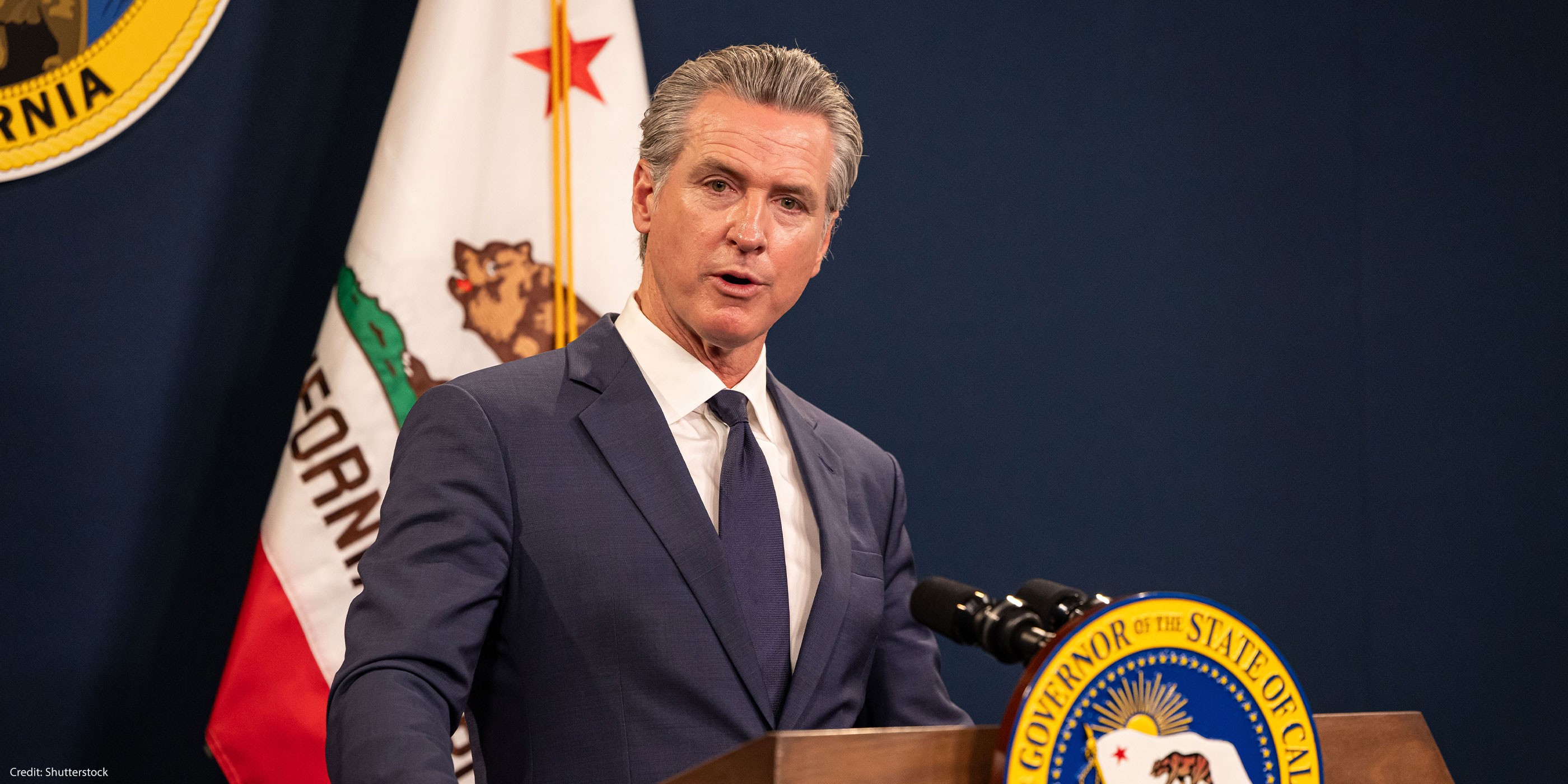
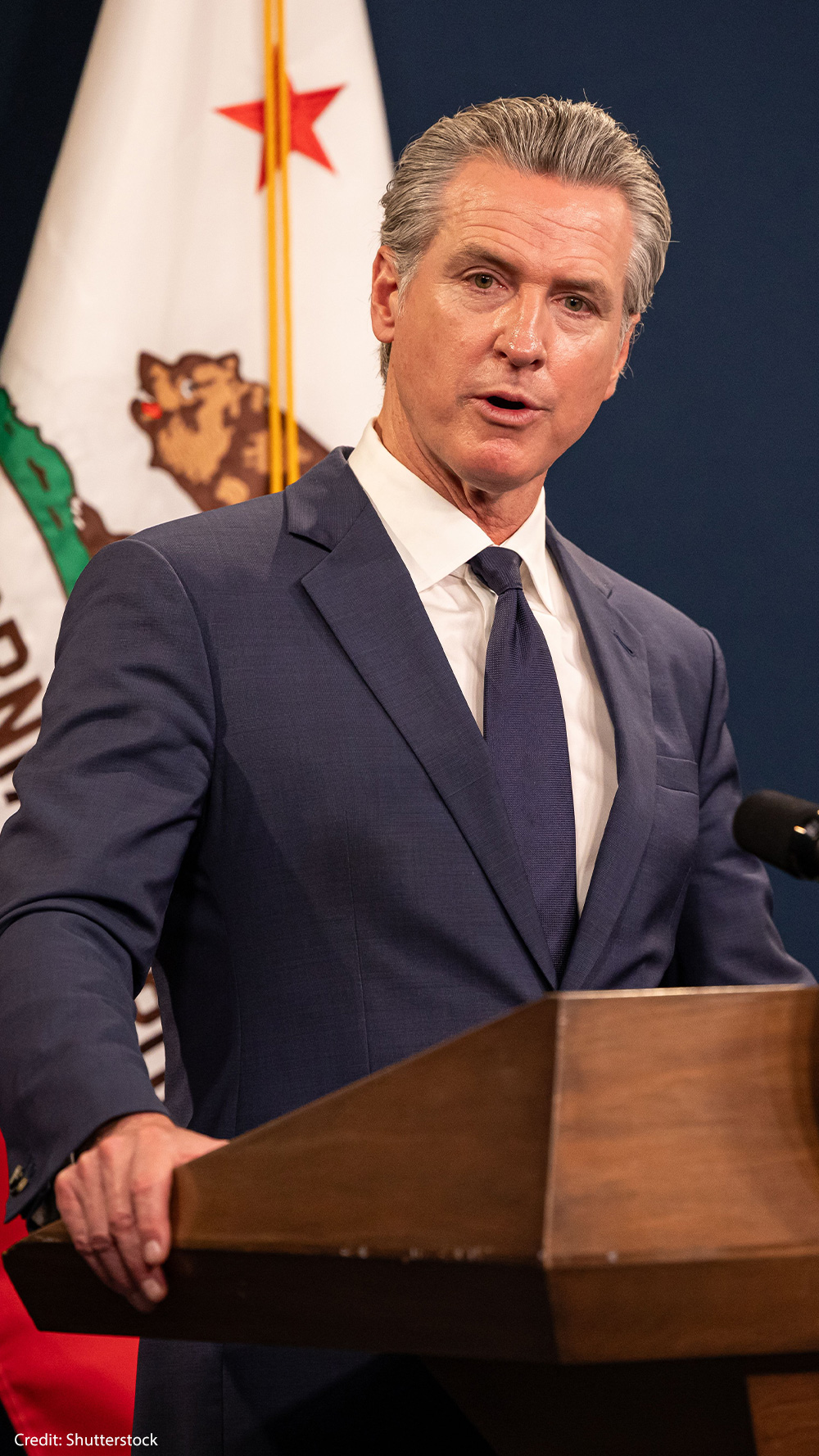
California Governor Gavin Newsom has announced he will commute all 548 death sentences in California.
This marks a historic step towards ending the death penalty in California and across the country. Until today, California had the largest death row in the Western Hemisphere, representing more than a quarter of America’s death row. These commutations modify each person’s death sentence to life without parole and will not result in anyone’s release from prison or vacate anyone’s conviction. Thanks to advocates’ tireless efforts, California has turned the page on a systemic injustice and set a powerful example for leaders across the country to follow.
“I take this action because I firmly believe that state-sanctioned killing is incompatible with California’s values, undermines the foundations of our justice system, and fails to make our communities safer,” Newsom said in an open letter announcing his decision.
The American Civil Liberties Union, ACLU of Southern California, ACLU of Northern California, ACLU of San Diego & Imperial Counties, and ACLU California Action joined the hundreds of organizations and individuals urging Newsom to take this necessary step to address the persistent and systemic flaws with the death penalty in California.
“These commutations reflect what justice demands: an end to a racist, error-prone, and inhumane punishment that has burdened California for far too long,” said ACLU Executive Director Anthony D. Romero. “By taking this step, Governor Newsom has affirmed that the death penalty has no place in California and he showed real courage by confronting racialized injustice head-on.”
What are death penalty commutations?
A death penalty commutation is the reduction of a death sentence, generally to life imprisonment. Newsom’s commutations, if upheld by the California Supreme Court, mean that all people on California’s death row who had a death sentence will no longer face execution, and will be resentenced to life in prison without parole. This change in sentencing does not mean people on California’s death row will be released from prison.
Newsom is not alone in commuting death sentences. Since 1976, seven governors and former President Joe Biden have commuted all or most death sentences in their jurisdictions, based on systemic circumstances not specific to any individual. These commutations were granted in states like Maryland and Illinois by governors of both political parties.
As people across the United States grapple with the gruesome realities of capital punishment — from high profile botched executions in Tennessee to the Trump administration’s cancelled proposal to livestream an execution, public support for capital punishment has eroded over the last five decades. This has shifted the responsibility to governors to address the harms of the death penalty by use of their executive authority, such as commutations.
Black and Latine people are more likely to be sentenced to death
Newsom’s announcement comes amid ongoing legal challenges to California’s death penalty system. In April 2024, the ACLU, alongside the NAACP Legal Defense Fund and the Office of the State Public Defender, brought a lawsuit challenging the state’s death penalty statute as racially discriminatory and unconstitutional under the Equal Protection guarantees of the California Constitution.
The evidence presented in that lawsuit revealed pervasive racial inequality in California’s implementation of the death penalty. Black people are up to eight times more likely to be sentenced to death when compared to non-Black defendants in similar situations, while Latine people are at least six times more likely to be sentenced to death.
Since November 2021, every single person sentenced to death in California has been a person of color. Nationally, Black people are more likely to be charged and sentenced to death, more likely to be executed, more likely to be excluded from capital juries, more likely to suffer a botched execution, and more likely to be falsely convicted and sent to death row.
“As the ACLU and allies have documented in courts across the country, a person’s risk of execution is predictable, but for all the wrong reasons: race, geography, and politics. Such profound, systemic injustice demands a systemic response,” Romero said. “Today, California comes closer to closing the chapter on a cruel and morally and legally corrupt practice and sets a powerful example for others to follow.”
California has the largest death row in the United States
The governor’s announcement will impact all 548 people on death row in California. Two-thirds of people have been on California’s death row for more than 20 years. Dozens of individuals have spent more than 40 years and experienced decades of delays caused by California’s inability to provide lawyers to handle capital appeals.
Nearly everyone on the state’s death row could not afford to hire their own defense attorneys for trial. Currently, 70 percent of people do not have lawyers or funding for the legal work to challenge their death sentence.
The system also often gets it wrong. Nationwide, for every 8 people executed, another is exonerated from death row. Over 200 people have been exonerated from death row since 1973, eight of them from California.
This broken system comes at an enormous cost. Since 1978, California has spent $6 billion of taxpayer funds on a system that has executed 13. The last execution was carried out over twenty years ago, on January 17, 2006.
“I have also listened to crime victims and survivors, public safety experts, and religious, civil rights, and other community leaders,” Newsom said. “They do not speak with one voice, but from these conversations, with parents and children of murder victims, prison wardens, and jurors who served in capital cases, I have taken counsel and I am grateful.”
What’s next for the death penalty in California and across the country?
Under California law, the governor has the unilateral authority to commute death sentences in cases without additional felony convictions, or about 30 percent of cases. For the remaining cases that do involve additional felony convictions, the California Supreme Court will have to review and approve the governor’s commutation request.
While commuting all of California’s death row is a historic step, it does not get rid of California’s death penalty statute or prevent prosecutors from seeking new death sentences. The ACLU is continuing to challenge the constitutionality of California’s death penalty, as a system that violates the state constitution’s guarantees of equal protection and freedom from cruel or unusual punishment.
Additionally, on the same day as Newsom’s announcement, there were executions in Indiana, Alabama, and Florida. Even as momentum swings towards abolition, some extreme politicians are doubling down on the death penalty and trying to roll back progress. Now is the time for all of us to use our voices to demand a more humane and just path forward — one that leaves this cruel and antiquated punishment behind.
Related Issues
Related Content
-
Press ReleaseNov 2026

Capital Punishment
Aclu Applauds Gov. Gavin Newsom’s Historic Commutation Of All Death Sentences In California. Explore Press Release.ACLU Applauds Gov. Gavin Newsom’s Historic Commutation of All Death Sentences in California
SACRAMENTO – California Gov. Gavin Newsom announced today that he was moving to commute all death sentences in California, marking a historic step towards ending the death penalty in California and across the country. The American Civil Liberties Union, ACLU of Southern California, ACLU of Northern California, ACLU of San Diego & Imperial Counties, and ACLU California Action joined the hundreds of organizations and individuals urging the Gov. Newsom to take this necessary step to address the persistent and systemic flaws with the death penalty in California. Anthony D. Romero, executive director of the American Civil Liberties Union, issued the following statement: “Today, Gov. Newsom made history by announcing his intention to commute every death sentence in California and clear the largest death row in the nation. In doing so, he honored his commitment to end a system that conflicts with human dignity, fairness, and the values enshrined in our Constitution. “These commutations reflect what justice demands: an end to a racist, error-prone, and inhumane punishment that has burdened California for far too long. By taking this step, Gov. Newsom has affirmed that the death penalty has no place in California and he showed real courage by confronting racialized injustice head-on. “The evidence against the death penalty has been overwhelming for decades. As the ACLU and allies have documented in courts across the country, a person’s risk of execution is predictable, but for all the wrong reasons: race, geography, and politics. Such profound, systemic injustice demands a systemic response. Today, California comes closer to closing the chapter on a cruel and morally and legally corrupt practice and sets a powerful example for others to follow.” Gov. Newsom’s announcement comes amid ongoing legal challenges to California’s death penalty system. In April 2024, the ACLU, alongside the NAACP Legal Defense Fund and the Office of the State Public Defender, brought a lawsuit challenging the state’s death penalty statute as racially discriminatory and unconstitutional under the Equal Protection guarantees of the California Constitution. The evidence presented in that lawsuit revealed pervasive racial bias in California’s implementation of the death penalty. Black people are up to eight times more likely to be sentenced to death when compared to similarly situated non-Black defendants, while Latino people are at least six times more likely to be sentenced to death. Under California law, the governor has the unilateral authority to commute death sentences in cases without additional felony convictions. For cases involving additional felony convictions, the governor’s commutation request now goes to the California Supreme Court for review and approval. Additional statements below are from ACLU affiliates in California: Abdi Soltani, executive director of the ACLU of Northern California: “The death penalty has no place in California – or any society that values justice, fairness, and human rights. Our organization has fought for decades against this antiquated, inhumane system, and we applaud the governor for taking bold action to end it.” Chandra Bhatnagar, executive director of the ACLU of Southern California: “From its inception, California has imposed the death penalty in a racially discriminatory manner, creating a two-tiered system of justice. With this historic act of clemency, the state can turn the page — rejecting a broken, biased system and embracing a more just and equitable future for all.” Norma Chávez-Peterson, executive director of the ACLU of San Diego & Imperial Counties: “Systemic injustices call for systemic solutions. By granting universal clemency to all people with death sentences in California, Governor Newsom has joined a chorus of leaders nationwide who have rejected the death penalty and recognized it as a failed and unjust experiment. This isn’t about individual cases, it is about addressing a system that is racist, fundamentally flawed, ineffective, and unfixable.” -
Press ReleaseNov 2026
Capital Punishment
Aclu Presents Evidence Of Racial Bias In Riverside County's Use Of The Death Penalty. Explore Press Release.ACLU Presents Evidence of Racial Bias in Riverside County's Use of the Death Penalty
RIVERSIDE – The ACLU and ACLU of Southern California presented expert testimony last week proving that Black and Latine defendants are far more likely than their white counterparts to face capital charges in Riverside County in the state’s first evidentiary hearing in a capital case under California’s Racial Justice Act (CRJA). The CRJA, passed in 2020, prohibits the state from pursuing convictions or sentences based on a person’s race, ethnicity, or national origin. The law allows individuals to challenge racial bias in their cases by demonstrating a trend of racial disparities in the places they were sentenced, without having to prove intentional discrimination. Throughout the week, six expert witnesses presented evidence of a historical and ongoing pattern of racial discrimination in Riverside County’s pursuit of the death penalty, including studies that show that: Black and Latine defendants are far more likely to face capital charges in Riverside County than white defendants accused of the same crimes. During District Attorney Mike Hestrin’s term, the office sought the death penalty against Black and Latine defendants at nearly twice the rate it did against white defendants. The odds that the District Attorney’s Office would file a death notice against a Black defendant were 7.31 times greater than the odds that it would for a white defendant. For Latine defendants, the odds were 3.86 times those for white defendants. “The facts here speak for themselves. Riverside County has a clear pattern of discriminating against Black and Latine individuals when it comes to the death penalty,” said Cassandra Stubbs, director of the ACLU’s Capital Punishment Project. “California passed the Racial Justice Act to confront racial bias in the criminal legal system and ensure that a person’s race does not determine their fate. The court should uphold that promise and take the death penalty off the table in this case. Racial disparities in Riverside County’s application of the death penalty have broader implications for the state. From 2015 to 2019, the county accounted for more than one third of California’s new death sentences despite only representing 6% of the state’s overall population. “Race must not be a factor in whether someone faces the death penalty,” said Summer Lacey, director of criminal justice and police practices at the ACLU Foundation of Southern California. “Riverside County accounts for a disproportionate amount of death penalty sentences in our state and the racial disparities in the Riverside District Attorney’s Office’s decision to seek death are plain and clear.” -
Press ReleaseOct 2026
Capital Punishment
Aclu Condemns Pentagon Plan To Livestream Firing Squad Execution. Explore Press Release.ACLU Condemns Pentagon Plan to Livestream Firing Squad Execution
NEW YORK – Yesterday, Defense Secretary Pete Hegseth announced that the Pentagon was planning to livestream the firing squad execution of former Army Maj. Nidal Malik Hasan for the killing of 13 people in a 2009 shooting at Fort Hood. The execution would be the military’s first execution in more than six decades. Yasmin Cader, deputy executive director at the American Civil Liberties Union, had the following statement: “The death penalty is cruel, immoral, and does nothing to advance public safety. Turning an execution into a public spectacle only exposes that cruelty and violence. Instead of moving us towards a world that is leaving this barbaric practice behind as the American public increasingly wants, the Trump administration plans to make entertainment out of this shameful practice. Authoritarian and extremist governments use public displays of violence to project a false sense of power. That is not who we are. Enough is enough. We must end the death penalty once and for all.” -
News & CommentaryOct 2026

Civil Liberties
+4 Issues
This Supreme Court Term: Our Rights And Freedoms At Stake. Explore News & Commentary.This Supreme Court Term: Our Rights and Freedoms at Stake
The ACLU could have its busiest Supreme Court term ever, with potential cases on immigration, voting rights, and religious freedom in schools.