When Ohio's children return to school in just a few weeks, they'll finally have long-overdue protection from corporal punishment (or "paddling") in their public schools. Last Wednesday, the Ohio legislature passed a ban on corporal punishment as part of the state's biennial budget. With Gov. Ted Strickland's signature, Ohio became the 30th state to ban corporal punishment.
You can send Gov. Strickland a message supporting this move here:
http://www.governor.ohio.gov/Assistance/ContacttheGovernor/tabid/150/Default.aspx
Corporal punishment is still legal in 20 states. It typically takes the form of students beaten with a wooden "paddle" or board about 1 ½ feet long, 6 inches wide, and 1 inch thick. The ACLU has interviewed students who were beaten for a wide range of misbehavior, from being late, to fighting. Students can be seriously injured by this punishment. You can see more in our report, A Violent Education.
Now that corporal punishment has been banned in Ohio, children there will be able to learn in safe, secure environments. Corporal punishment is ineffective and abusive; it discourages children from learning and has been linked to higher drop-out rates. Better methods of disciplining children, including Positive Behavior Intervention and Support, provide safe, secure schools where children can learn. The ACLU congratulates Ohio in this important move for securing a better future for its children.
Related Issues
Related Content
-
News & CommentaryFeb 2026
Immigrants' Rights
Human Rights
Congress Must Rein In Ice To Improve The State Of The Union. Explore News & Commentary.Congress Must Rein in ICE to Improve the State of the Union
President Donald Trump will likely celebrate a false sense of success in his State of the Union address. There’s strength in this union, but not the way the president thinks. -
Press ReleaseFeb 2026

Immigrants' Rights
Human Rights
Aclu Of Minnesota And Aclu Comment On The Trump Administration Announcing An End To Operation Metro Surge. Explore Press Release.ACLU of Minnesota and ACLU Comment on the Trump Administration Announcing an End to Operation Metro Surge
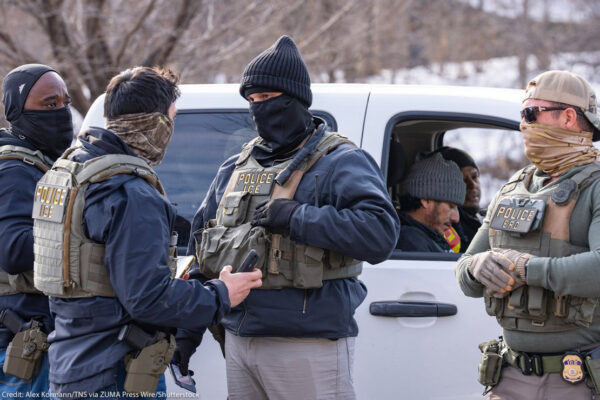
MINNEAPOLIS — Today, “Border Czar” Tom Homan announced that the administration is ending its domestic federal deployment – Operation Metro Surge – in Minnesota. This deployment resulted in shootings, deaths, and innumerable constitutional rights violations. Masked federal agents in military gear have ignored basic human rights in their enforcement activity against Minnesotans, especially targeting Somali and Latino communities. “For the past two months, Minneapolis and St. Paul have felt like cities under siege,” said Deepinder Mayell, Executive Director of the ACLU of Minnesota. “While today’s announcement by Tom Homan is welcomed, federal agents continue to use tactics and practices that violate constitutional rights. There is no evidence that these practices have changed. What we’ve seen in Minnesota represents a significant escalation in the administration's attack on free speech, due process, and equal protection rights. Now is not the time for Minnesotans to rest. The ACLU of Minnesota will continue working in the courts, the legislature, and in our communities to work to rebuild what Operation Metro Surge tried to destroy.” There are limited details on how the supposed drawdown will occur and on what timeline. The ACLU of Minnesota and the ACLU will continue our lawsuits and work to hold law enforcement accountable for their abuses. Similar to other cities and states, after Operation Metro Surge concludes, federal agents will remain in some capacity, and more federal agents could return at any time. We will continue to monitor reports of racial profiling, physical abuse, targeting of children and families, and illegal detention from communities around the nation. “This ‘operation’ involved violence, misconduct, and constitutional violations at every turn, and the Minnesota community made the world know the abuses occurring in their neighborhoods,” said Naureen Shah, Director of Government Affairs for the ACLU’s Equality Division. “The administration now says it’s leaving, a sign that it feels the public’s outrage, but we know better than to take hollow words as truth. We will continue fighting in court over their attacks on our rights and safety, but let’s be clear: Congress has a mandate to rein in these federal agencies and ensure that none of these violations happen again in Minneapolis or anywhere else.” In Hussen v. Noem, Minnesotans are challenging the administration's policy of racially profiling, unlawfully seizing, and unlawfully arresting people without a warrant and without probable cause. In Tincher v. Noem, Minnesotans are challenging the administration’s policy and practice of retaliation and excessive use of force against people observing, recording, and protesting immigration enforcement activity. -
Press ReleaseFeb 2026
Human Rights
Aclu Calls On U.n. To Investigate Trump Administration's Gross Violations Of Human Rights In Minnesota. Explore Press Release.ACLU Calls On U.N. to Investigate Trump Administration's Gross Violations of Human Rights in Minnesota
WASHINGTON — The American Civil Liberties Union and the ACLU of Minnesota sent an urgent submission late last night to the United Nations Committee on the Elimination of Racial Discrimination (CERD), requesting the committee to use its early warning and urgent action procedure in response to the human rights crisis following the Trump administration's deployment of federal forces in Minneapolis and the St. Paul metropolitan area. The submission details how federal agents have ignored basic human rights in their enforcement activity against Minnesotans, especially targeting Somali and Latino communities. The ACLU and ACLU of Minnesota call on CERD to issue a decision under its early warning and urgent actions procedures to intervene and investigate the U.S.’s grave violations of its human rights obligations. “The Trump administration’s egregious crackdown in Minnesota is not only flouting the Constitution but also United States international human rights obligations that prohibit the use of racial and ethnic profiling, extra-judicial killings and unlawful use of force against protesters and observers,” said Jamil Dakwar, director the Human Rights Program at the American Civil Liberties Union. “We are calling on the United Nations to hold the U.S. government accountable for its blatant violations of international law and to officially report on its disregard for their human rights treaty obligations.” The submission underscores how ICE’s unlawful and unconstitutional stops and arrests of Minnesotans on the basis of race, ethnicity, and national origin represent flagrant violations of the freedoms and rights enshrined in the International Convention on the Elimination of All Forms of Racial Discrimination (ICERD) — guarantees that the United States is legally bound to uphold and protect at federal, state and local levels as a state party to the treaty since 1994. “The Trump administration’s ongoing immigration enforcement operations in Minnesota are being carried out by thousands of masked federal agents in military gear who are ignoring basic constitutional and human rights of Minnesotans,” said Teresa Nelson, legal director of the ACLU of Minnesota. “Their targeting of our Somali and Latino communities threatens Minnesotans’ most fundamental rights, and it has spread fear among immigrant communities and neighborhoods.” For more information about ICERD and the Committee’s Early Warning and Urgent Action procedures here. -
MassachusettsJan 2026
National Security
Human Rights
Burnley V. U.s.: Demanding Accountability On Caribbean Boat Strikes. Explore Case.Burnley v. U.S.: Demanding Accountability on Caribbean Boat Strikes
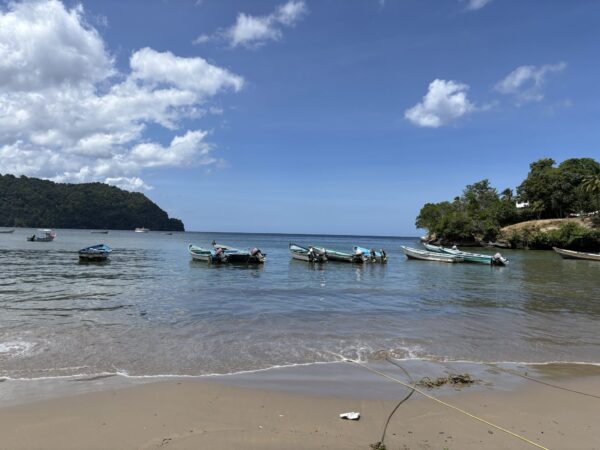
On October 14, 2025, the United States military carried out an illegal missile strike that killed Chad Joseph and Rishi Samaroo, two Trinidadian men who were traveling by boat from Venezuela to their homes in Las Cuevas, Trinidad and Tobago. The American Civil Liberties Union, the Center for Constitutional Rights, the American Civil Liberties Union of Massachusetts, and Professor Jonathan Hafetz of Seton Hall Law School filed suit on behalf of Lenore Burnley, Mr. Joseph’s mother, and Sallycar Korasingh, Mr. Samaroo’s sister, seeking redress and accountability for these extrajudicial killings pursuant to the Death on the High Seas Act and the Alien Tort Statute.