States Have the Power to Hold Federal Agents Accountable by Allowing People to Sue Them for Rights Violations
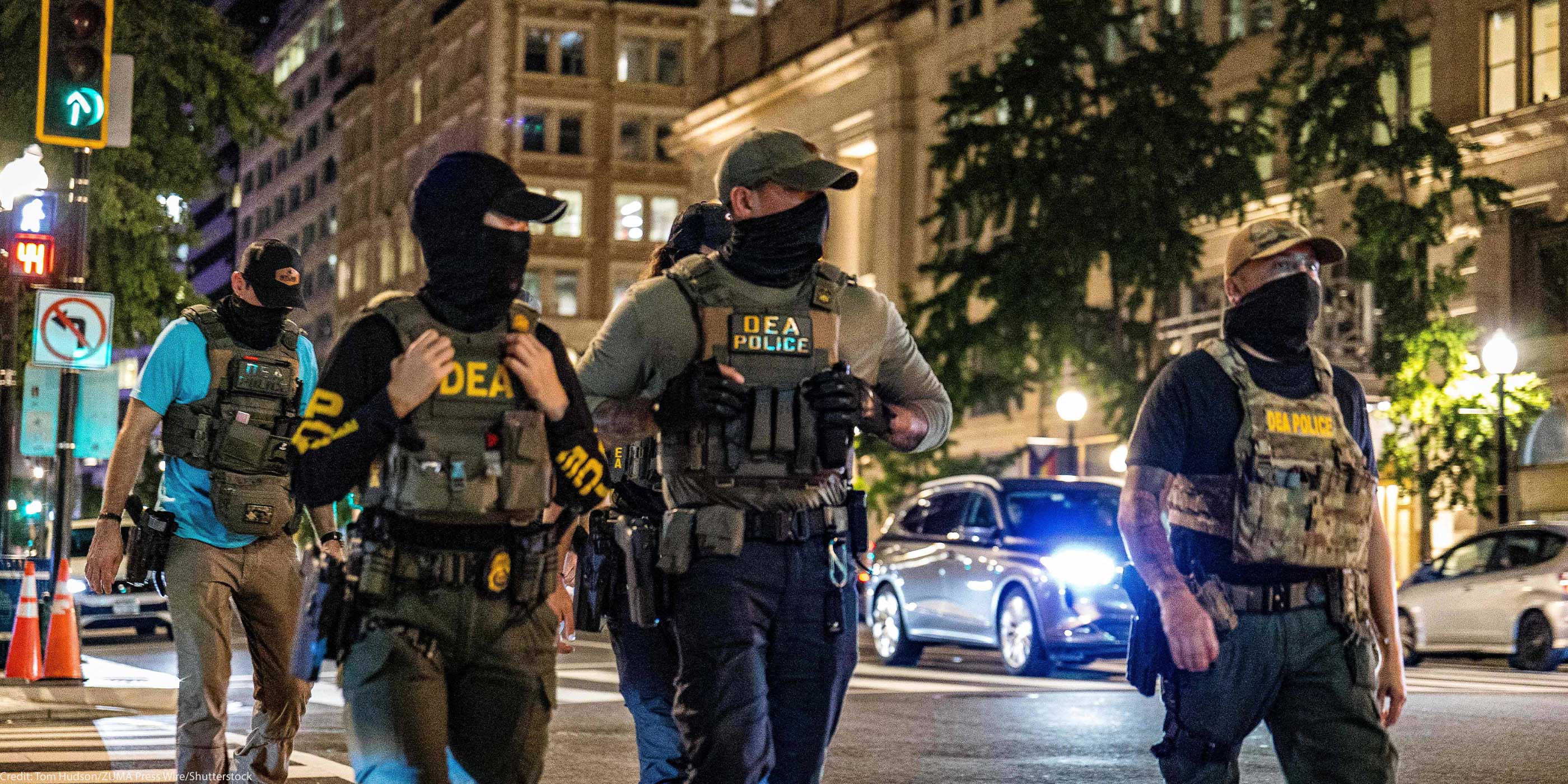
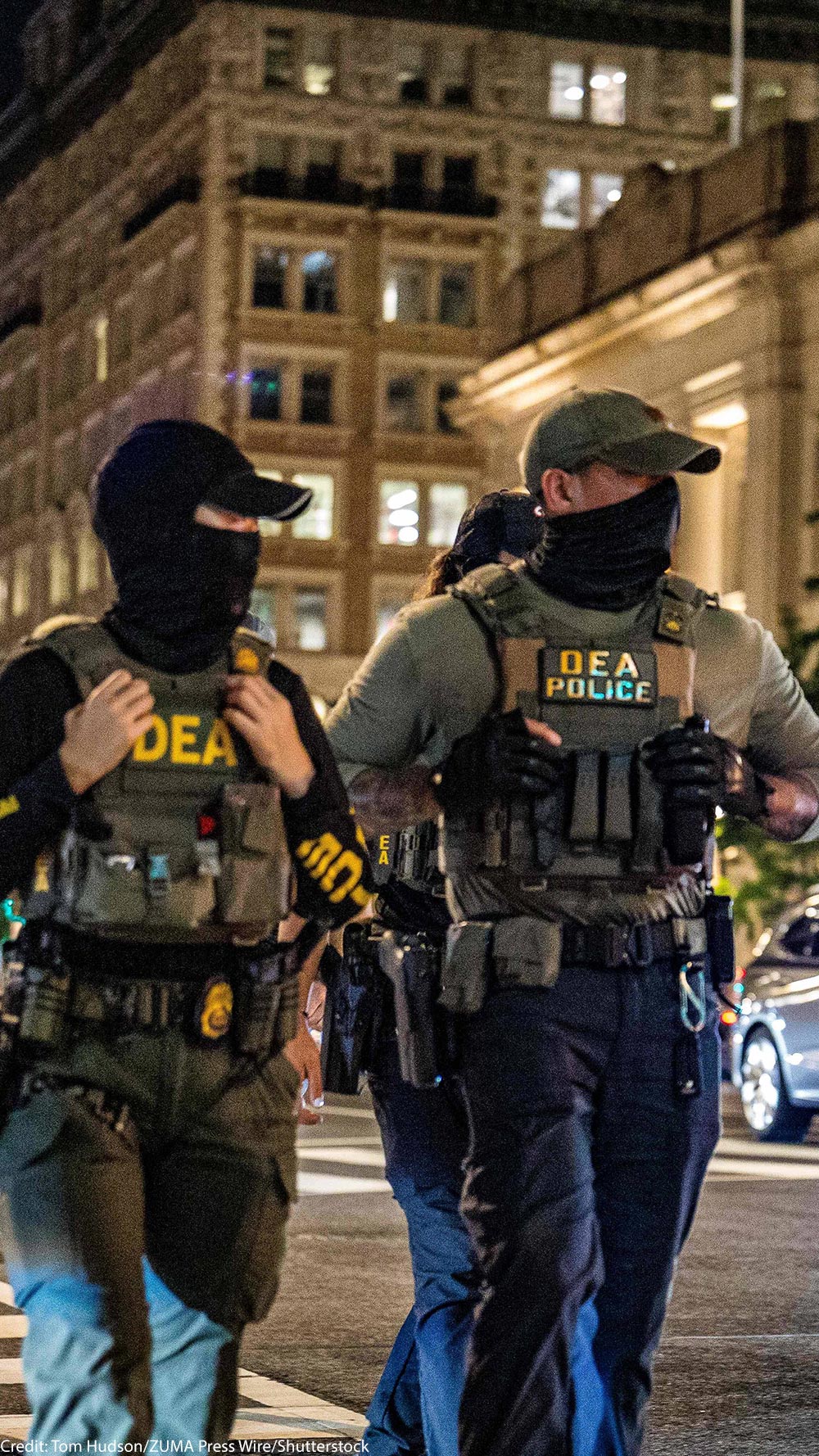
Over the past year, federal agents have arrested U.S. citizens, dragged children from their beds in the middle of the night, smashed car windows, and shot, sometimes fatally, those they encounter. As these agents advance President Trump’s extreme deportation agenda, many across the United States have watched in horror as they trample the constitutional rights of immigrant communities and others, acting as though they are immune from accountability. All too often, they are.
When people seek justice in federal court, they often find that the proverbial courthouse doors are shut. Because of court doctrines and congressional inaction, suing federal agents under federal law is often extremely difficult. But states can fill that gap. By passing new laws, state legislatures can ensure that federal officers, no less than state and local agents, answer for the harms they cause. Left unchecked, federal agents’ impunity invites further wrongdoing, turns our constitutional protections into empty promises, and makes us all less safe.
When people seek justice in federal court, they often find that the proverbial courthouse doors are shut.
In fact, these laws aren’t some fringe idea: holding federal agents accountable is consistent with this country’s history, the U.S. Constitution, and the founders’ intent for us to push back against government abuse.
For much of U.S. history, state law was the primary legal tool for suing federal officers who disregard our constitutional protections. Under state tort law, for example, people subjected to excessive force by federal agents could sue individual officers for damages since that conduct can also qualify as battery.
In 1971, the Supreme Court in Bivens v. Six Unknown Named Agents made it easier for people to take federal officers to federal court to seek compensation when those officers violated their constitutional rights. But since then, the court has significantly narrowed these so-called Bivens actions and left a dangerous accountability gap.
Now, as federal officers become more aggressive and commit more constitutional violations, sometimes with deadly results, it is even more critical for states to act.
To address this gap, five states, including California, Maine, Massachusetts, New Jersey, and Illinois, have passed laws that can hold federal officers accountable. These laws are sometimes known as civil rights protection acts, or “converse-1983” laws. The name refers to the federal statute that lets people seek justice when state and local officers, but not federal agents, infringe on constitutional rights. California’s Bane Act, for example, was passed in 1987 following a repeated pattern of police misconduct. But because of its expansive language and strong protections, this law also became an important safeguard as federal officers became harder to sue. Massachusetts’ Civil Rights Act, passed in 1979, similarly allows lawsuits against “any person” who interferes with someone’s rights through “threats, intimidation, or coercion.”
Now, as federal officers become more aggressive and commit more constitutional violations, sometimes with deadly results, it is even more critical for states to act.
Last year, Illinois state lawmakers passed the Bivens Act in response to federal agents’ aggressive immigration enforcement and constitutional violations. The law lets individuals take legal action against anyone who violates constitutional rights during civil immigration enforcement, protects employees who report violations, and allows courts to award compensatory and punitive damages. Passed alongside several other amendments, the act aims to ensure that immigrants in Illinois are safe in state courts, hospitals, universities, and schools.
We must demand lawmakers in every state protect their constituents.
No matter which uniform they wear, federal, state, and local law enforcement officers, as well as other government officials, must respect our constitutional rights — including the right to protest, the right to due process, and the right to be free from unlawful searches in our homes and communities. While we have imperfect, but nevertheless meaningful, ways to seek accountability from state and local officers, the tools to hold federal agents responsible for those same violations are far more limited. Converse-1983 laws restore a basic promise: if your rights are violated, you can seek justice through the courts.
Under the current administration, federal agents have been told repeatedly that they can operate with total immunity. And we’ve seen the devastating results. As the federal government’s actions strike at the heart of our rights and freedoms without consequence, states cannot afford to delay. By passing converse-1983 laws, state legislatures can help restore accountability, prevent abuse, and protect every community from unchecked government violence. Nine states, including Colorado, New York, Vermont, and Wisconsin, are currently considering converse-1983 bills that empower their residents to take legal action against federal officers for violating the Constitution. We must demand lawmakers in every state protect their constituents.
Related Issues
Related Content
-
News & CommentaryOct 2026
Immigrants' Rights
New Aclu Documentary Reveals Stories Of Families At Idaho Immigration Raid. Explore News & Commentary.New ACLU Documentary Reveals Stories of Families at Idaho Immigration Raid
“Wilder Raids,” the ACLU’s latest short documentary features the harrowing stories of families caught in a violent immigration raid at a horse race in Wilder, Idaho last year. -
Press ReleaseOct 2026

Immigrants' Rights
Criminal Law Reform
New Aclu Film Exposes Human Toll Of Immigration Raid In Wilder, Idaho As Families’ Lawsuit Moves Forward. Explore Press Release.New ACLU Film Exposes Human Toll of Immigration Raid in Wilder, Idaho as Families’ Lawsuit Moves Forward
NEW YORK – The American Civil Liberties Union premiered Wilder Raids, an original short film telling the story of two families whose lives were upended by a violent immigration raid at a horse-racing event in Wilder, Idaho, one year ago today. The film follows the families as they reckon with the lasting trauma of the raid and details the ongoing lawsuit brought by the ACLU, ACLU of Idaho, Cooley LLP, and Stoel Rives LLP seeking accountability. One year ago today, more than 200 federal, state, and local law enforcement officers descended on an otherwise peaceful family event at a horse-racing track in Wilder, Idaho. Law enforcement arrived in armored trucks and a helicopter with flashbang grenades and guns drawn and detained approximately 400 spectators – including U.S. citizens and children – for four hours in inhumane conditions before subjecting everyone to suspicionless immigration interrogations. Through interviews with the families and an inside look at the ongoing legal fight, Wilder Raids explores the lasting impact of the raid on those who experienced it and the broader Wilder community. Juana Rodriguez, one of the lead plaintiffs and featured storyteller in the film, is a U.S. citizen who was at the event with her 3-year-old son. After being violently rounded up with hundreds of other families, Rodriguez was placed in zip ties and detained for several hours without food or water. Law enforcement instructed her toddler to hold onto her pocket while Rodriguez remained zip tied and unable to comfort her son. “I was like, why? I have my son with me. I have to take care of him. I was scared. If I overreacted, I felt like they were going to hurt me,” Rodriguez said. “For the longest time, my son begged me for food. He begged me for water … I wish I could have done more in the moment, but I couldn’t. I think that’s what really gets to me till this day.” The families featured in the film filed a lawsuit last February that argues that federal, state, and local law enforcement used criminal warrants as a pretext for a sweeping immigration dragnet at an event where they knew attendees would be predominantly Latino. The complaint further alleges that the agencies conspired to deprive those detained of their Fourth Amendment rights against unreasonable seizures and their right to equal protection regardless of ethnicity. The lawsuit invokes federal civil rights laws enacted after the Civil War to protect people from racialized government violence and provides a potential avenue for holding federal actors accountable for constitutional violations. “Defendants continue to characterize what happened in Wilder as an ordinary warrant execution, but there was nothing routine about the terror they inflicted on hundreds of people trying to spend a Sunday with their families,” said Jenn Rolnick Borchetta, deputy director on policing at the ACLU. “This film makes it impossible to ignore what our clients and their families experienced that day and puts a human face on the reckless violence and cruelty inflicted on the community. One year later, we will not let the government rewrite what happened in Wilder and we will continue fighting to hold those responsible accountable.” “The violent raid in Wilder has had significant ripple effects across many communities in Idaho, which can still be felt today, a year later,” said Leo Morales, executive director of the ACLU of Idaho. “The film reminds us of how critical it is for every American to rise to the challenge of protecting civil liberties. It also highlights how personal and fragile our rights can be if left unprotected from government action. Families cannot simply shake off and ignore the abuse; it is our collective responsibility to seek justice, take action, and make things whole.” The lawsuit is ongoing as the families await a decision on the defendants’ motions to dismiss. On Sept. 8, 2026, plaintiffs filed an opposition brief urging the federal court to allow the lawsuit to proceed. Additional statements from co-counsel are below. Jade Ford, an attorney at Cooley LLP: “This film sends a clear message: the Wilder community will not stand idly by in the face of constitutional violations. Every person in this country is entitled to freedom from unlawful seizure and freedom from discriminatory targeting. Those are not hollow promises—they are vital constitutional guarantees, and the Wilder community intends to see them enforced.” Wendy Olsen, an attorney at Stoel Rives LLP: “All Idaho families should be able to enjoy community and cultural events without fear that their rights will be violated, that their children will be traumatized or that they will be targeted based on their perceived color or national origin. This film bravely tells that story on behalf of the Wilder community.” -
Press ReleaseOct 2026
Immigrants' Rights
Legal Organizations Urge Federal Court To End Abuse And Deadly Conditions And Protect People Detained At Camp East Montana . Explore Press Release.Legal Organizations Urge Federal Court to End Abuse and Deadly Conditions and Protect People Detained at Camp East Montana
EL PASO, Texas – Legal organizations filed a motion for preliminary injunction demanding ICE provide adequate healthcare and improve conditions for people detained at Camp East Montana, the nation’s largest immigration detention facility located on the Fort Bliss military base in El Paso, Texas. The motion comes as ICE is on track to have its deadliest fiscal year on record, as deaths in detention have nearly doubled since last fall, including three deaths at Camp East Montana alone. The motion, which was supported by more than 40 declarations from people currently or formerly detained at Camp East Montana, loved ones of people who have died, and correctional and medical experts, describes the government’s systemic failure to provide adequate medical care and humane living conditions. The conditions reported include medical neglect, unsanitary and unsafe conditions, confinement to windowless tents for 23 to 24 hours a day, barriers to legal counsel, and such little food that people experience substantial weight loss and other serious medical conditions. People detained at the facility also describe being physically beaten by guards and confined in extreme isolation as punishment for seeking help. “The conditions reported in those declarations shock the conscience,” Dean Williams, a former state prison director who evaluated the conditions in Camp East Montana, wrote in support of the motion. “People describe degrading, unsafe, and unsanitary conditions, abuse by guards, and extreme restrictions and harsh treatment far beyond those of the most secure prisons I have overseen.” In May of 2026, the American Civil Liberties Union, ACLU of Texas, Texas Civil Rights Project, and Farella Braun + Martel LLP filed their lawsuit against ICE after the federal government began detaining thousands of people in a tent encampment on the Fort Bliss military base in the El Paso desert. The facility has repeatedly come under fire since its opening in August 2025 following rampant reports of abusive, inhumane, and deadly conditions. Quotes from named plaintiffs in the lawsuit are as follows: “Urgent protection is desperately needed at Camp East Montana,” said named plaintiff Gerald Akari Angye. “Today, people are still being detained in this windowless camp with inadequate food, water, medicine, and recreation. People with health issues do not receive the care they need. This case remains important to me because I am a voice for those harmed by this regime. I will never be the same after the violence I experienced by guards at Camp East Montana. Many others are still being held in those horrible conditions. The United States preaches democracy and human rights, but it is separating families and torturing people who are seeking safety. The world is watching. The inhumane conditions at Camp East Montana seem to be getting worse. No one of good conscience can support what is happening there. I plead with the court to give relief to people held in the horrible Camp East Montana.” “It’s hard for outside observers to understand what people go through at Camp East Montana,” said named plaintiff Navdeep. “That’s why we are sharing our stories. I don’t want people to continue suffering and experiencing the terrible conditions I experienced there. We need the court to take action to immediately improve conditions at Camp East Montana and to prevent additional suffering.” “Camp East Montana is not built to accommodate the basic needs of people,” said named plaintiff ZOR. “If the court fails to intervene, things may get even worse. If nothing is done, I worry it will be a signal that it is okay that for the law to continue being ignored at Camp East Montana. I believe the conditions at Camp East Montana are meant to break people down emotionally and to punish them so they become desperate to leave. It is unbearable to be mistreated every day and trapped in a dirty room with up to 72 people. Many of us are only able to endure it because of the strength we get from the thought of our families.” Additional quotes from co-counsel are as follows: “We cannot wait any longer,” said Rita Lomio, Senior Counsel at the ACLU’s National Prison Project. “ICE and the Department of Defense have long known of the cruel and deadly conditions at the tent encampment on the Fort Bliss military base. They have demonstrated time and again that they cannot or will not act to end the abuse. Former prison and jail directors have found that conditions at Camp East Montana are unprecedented and make all who live and work at the encampment unsafe. While litigation continues, a preliminary injunction is needed to end the most egregious abuses before more people needlessly suffer and die.” “The need for court-ordered relief is urgent,” said Savannah Kumar, staff attorney at the ACLU of Texas. “For the past year, the government has disappeared thousands of people into its desert camp that has been the site of beatings by guards, death, disease, and hunger. The situation has continued to deteriorate. People held inside tents describe the denial of desperately needed medical care, environmental hazards, and filthy conditions. These unbearable conditions violate U.S. law and erode the moral fabric of our country. A preliminary injunction is necessary to prevent additional death and abuses at the largest immigration detention camp in the country. All of us, no matter where we were born, are created equal and are entitled to dignity that is being systematically denied at this horrific tent camp.” “State-sanctioned violence is occurring in and outside of facilities like Camp East Montana, and the blatant disregard for human life and access to basic health care should shock the conscience of every American,” said Rochelle Garza, President of the Texas Civil Rights Project. “If we, as a society, say nothing and go along with the notion that certain lives matter less than others, the government’s abuse and neglect will continue to be normalized. Our preliminary injunction is an effort to stop ICE, and the harm that has seeped into the walls of their detention facilities, from going unchecked.” “Detention does not strip individuals of their fundamental rights to safety, dignity, and necessary medical care,” said Cynthia Castillo, partner at Farella Braun + Martel LLP. “The record in this case shows deeply troubling medical neglect, dangerous living conditions, and mistreatment that demand immediate action. A preliminary injunction is essential to prevent further irreparable harm and to ensure that individuals detained at Camp East Montana are treated humanely while their legal claims are heard.” More information on the lawsuit is available here: https://www.aclu.org/cases/akari-angye-et-al-v-ice -
News & CommentaryOct 2026
Immigrants' Rights
A Congressman Questioned Reports Of Deadly Conditions At An Ice Detention Center. Then Two More People Died.. Explore News & Commentary.A Congressman Questioned Reports of Deadly Conditions at an ICE Detention Center. Then Two More People Died.
Nearly 60 people have died in detention, as calls against medical neglect, inedible food, and unsanitary conditions continue. Congress must establish standards of care and accountability.