'Let the Record Show' Tells a Story of the Queer Black Attorney Who Laid the Foundation for Racial and Gender Rights
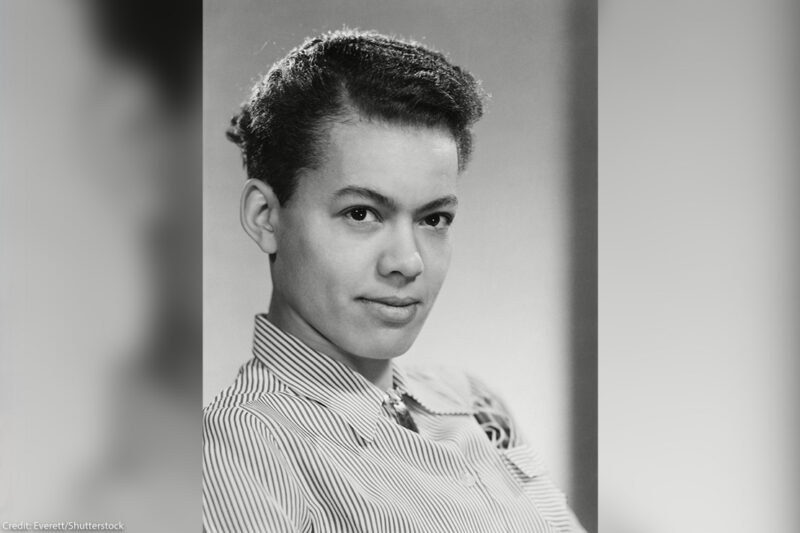
Reverend Dr. Pauli Murray lived an expansive life: as a civil rights activist, legal theorist, author, poet, and Episcopal priest. In a world that rarely made room for people who looked, thought, and experienced life like Murray, each title represented a barrier that they had to break. As a result, Murray became a first in nearly every space they entered, and their work laid the foundation for an intersectional approach to advocacy and served as a framework for activists in tackling major threats to racial justice, gender justice, and the right to protest. As a member of the ACLU’s Board and an advisor, Murray’s leadership was critical in shaping legal strategies and guiding the organization’s women’s right work. Their invaluable contributions to the legal field still inform our work today.
But who was the person behind the legal accomplishments?
In our latest episode of “Let the Record Show,” ACLU’s newest history podcast, hosts, Matt Beat and Shereen Marisol Meraji break down White v. Crook, a case about who gets to sit on a jury. Murray, a visionary lawyer on the case, built out an argument that said the Constitution protects against both race and sex discrimination, including in jury selection. The case showed how these forms of discrimination work together to protect the same power structure. The ACLU has long celebrated Murray’s accomplishments in fighting for civil liberties and have written expansively about their life; here, we’ve taken a moment to honor the person behind the complex caseload.

Women's Rights
Racial Justice
The Lawyer Who Changed the Way We Look at Discrimination
Women's Rights
Racial Justice
The Lawyer Who Changed the Way We Look at Discrimination
Defying Jim Crow and Traditional Gender Identities as a Child
Born Anna Pauline Murray in Baltimore in 1910, Murray is the grandchild and great-grandchild of enslaved people. Murray’s mother died when Murray was 3 years old. Their father was killed less than a decade later. By 12, Murray went to live with an aunt in North Carolina.
Murray’s aunt noticed early on that they rejected many traditional ideas about femininity and calls them “a little boy-girl.” Murray embraced this sense of gender expansiveness into adulthood — and sometimes used the name, Oliver.
In North Carolina, Murray refused to get on segregated streetcars, opting instead to walk or ride their bike. They didn’t go to the movies because of the separate entrance and instead read a lot.
Murray’s Intersectional Identity and Expansive Ideas of Justice
Murray went on to go to Hunter College in 1929 and became one of four Black students in a class of 247. While at Hunter, Murray wore pants instead of skirts and cut their hair short.
Murray’s intersectional identity made them uniquely qualified to explore the legal frameworks of racial and gender discrimination. Murray went on to attend law school at Howard, where they stood out in a class where all the other students were men. Murray also graduated first in their class. There, they developed a concept, which they called “Jane Crow,” referring to the unique discrimination based on both gender and race.
“In my preoccupation with the brutalities of racism,” Murray wrote. “I had failed until now to recognize the subtler, more ambiguous expressions of sexism.”
At Howard, they also wrote a powerful thesis about how to overturn of Plessy v. Ferguson, which allowed “separate but equal” racial segregation. The other students reportedly hooted at their argument which focused on how the Fourteenth Amendment’s Equal Protection Clause could be used to dismantle the separate but equal doctrine. Murray even bet a skeptical professor $10 that Plessy would be overturned within 25 years. They were right. Supreme Court Justice Thurgood Marshall, while still a litigator, went on to use Murray’s innovative legal theory in Brown v. Board of Education, where separate but equal was finally overturned.
In our latest episode of “Let the Record Show,” Chase Strangio, co-director of the LGBTQ and HIV project at the ACLU, said so much of his life and work depends on that of Murray’s. He noted that beyond having an incredible legal mind, Murray was also an artist, a creator, a reverend.
“As a lawyer, one of the things I’m endlessly frustrated by every day is how constrained law is and how unimaginative, therefore, many legal thinkers are,” Strangio said. “Pauli had no patience for that. And that allowed Pauli to sort of imagine demanding so much more than what other people were demanding in their minds within the law.”
It made their work and legacy so much richer, Strangio added. “It also, of course, meant that they were imagining a type of freedom and embodiment that did not comport with the constraints of their time,” he said. As a result, the world painfully cast Murray as “insane” because of how expansive their ideas of justice and embodiment are. And yet, those ideals are at the center of the ACLU’s intersectional approach to much of our work today.
Beyond writing legal arguments, Murray also wrote about the same ideas of racial and gender justice in a book of poetry, “Dark Testament,” written between 1933 and 1941.
Hope is a crushed stalk
Between clenched fingers.
Hope is a bird’s wing
Broken by stone.
Hope is a word in a tuneless ditty
A word whispered with the wind,
A dream of forty acres and a mule,
A cabin of one’s own and a moment to rest,
A name and a place for one’s children
And children’s children at last.
Hope is a song in a weary throat.
Give me a song of hope
And a world where I can sing it.
Give me a song of faith
And a people to believe in it.
Give me a song of kindliness
And a country where I can live it.
Give me a song of hope and love
And a brown girl’s heart to hear it.
Murray’s legacy lives on, especially in our work at the ACLU. ACLU’s Pauli Murray Fellowship was founded in 2022 in honor of Murray. The fellowship invests in and cultivates leadership pathways for individuals who have overcome systemic barriers to achievement to support development of future leaders.
For our former fellow, Areej Qadeer, Murray’s insistence on understanding justice through identity and intersectionality has profoundly shaped her own work as an organizer and advocate.
“I deeply resonate with Pauli Murray’s conviction that identity cannot be reduced to the parts of ourselves most palatable to society,” Qadeer said. “Like Murray, I embody intersecting marginalized identities: I am Muslim, a woman who wears hijab, the daughter of immigrants, and a first-generation American. Murray’s example has given me the courage to stand confidently in my difference and recognize the very aspects of my identity that have exposed me to discrimination as beacons of strength.”
To learn more about a case Murray helped built, listen to our latest episode of “Let the Record Show.” You can also learn more about Murray’s life and legal accomplishments here.
Related Issues
Related Content
-
Press ReleaseOct 2026
LGBTQ Rights
Supreme Court Denies Trump Administration Request To Withhold Health Care From Incarcerated Transgender People. Explore Press Release.Supreme Court Denies Trump Administration Request to Withhold Health Care from Incarcerated Transgender People
WASHINGTON – The Supreme Court of the United States has rejected a request from the Trump Administration and the Federal Bureau of Prisons (BOP) to allow prison officials to withhold gender-affirming health care from transgender people in federal prisons. The Court denied a stay request from the administration against a preliminary injunction issued by a lower federal court in June that blocked officials from enforcing a new policy that would reverse decades of BOP policy and deny access to such health care altogether. “This is a critical ruling for our clients and all transgender people in Bureau of Prisons custody,” said Li Nowlin-Sohl, Senior Staff Attorney with the ACLU’s LGBTQ & HIV Project. “The denial of medically necessary health care, including gender-affirming health care, to people in prison is a violation of their fundamental constitutional rights. We will continue to defend the rights of our clients and all incarcerated people.” “Today’s ruling affirms that everyone, trans or not, deserves access to medically necessary health care and to be treated with dignity in federal custody,” said Shawn Thomas Meerkamper (they/them), Managing Attorney at Transgender Law Center. “We will continue fighting to ensure that all people confined to federal prisons can access the care they need.” “The Court was clear: the BOP cannot illegitimately deny people critical health care while the government’s appeal proceeds,” said Aditi Shah, staff attorney at ACLU-D.C. “This ruling will prevent serious and irreparable harm to Plaintiffs and the class while we continue to challenge the government’s unlawful efforts to deny medically necessary health care for political reasons.” Following a January 2025 Executive Order from President Trump that prohibited gender-affirming care for transgender people in federal prisons, the BOP issued memoranda implementing the EO’s ban, prohibiting the use of federal funds to provide hormone therapy or social accommodations such as gender-appropriate clothing and commissary items to treat gender dysphoria. In March 2025, two transgender men and one transgender woman serving sentences in federal facilities in New Jersey, Minnesota, and Florida filed a class action lawsuit on behalf of approximately 1,000 transgender people in BOP custody against the Trump Administration and BOP, challenging the ban on gender-affirming health care. In June 2025, the federal district court in Washington, D.C. preliminarily enjoined the ban. In February 2026, BOP issued Program Statement 5260.01, replacing the implementing memoranda but still prohibiting gender-affirming health care to treat gender dysphoria, including hormone therapy and social accommodations. After Plaintiffs filed a supplemental complaint and motion to preliminarily enjoin the Program Statement, on June 17, 2026, the federal district court in Washington, D.C., issued a preliminary injunction, blocking BOP from enforcing the Program Statement and ordering BOP to continue providing gender-affirming care pursuant to its pre-EO policy while the lawsuit proceeds. The Trump Administration and BOP appealed that decision and moved to stay the injunction pending appeal so that BOP could immediately start withholding people’s health care. This stay request was rejected by the U.S. Court of Appeals for the District of Columbia and, in today’s decision, the Supreme Court likewise denied that request, permitting the district court’s preliminary injunction to remain in place as the case proceeds. The plaintiffs in the case are represented by the ACLU, the ACLU of DC, and the Transgender Law Center. -
Press ReleaseAug 2026
LGBTQ Rights
Appeals Court Rejects Trump Administration’s Latest Effort To Seize Private Medical Records Of Transgender New Yorkers. Explore Press Release.Appeals Court Rejects Trump Administration’s Latest Effort to Seize Private Medical Records of Transgender New Yorkers
NEW YORK – In a victory for transgender young people and their families, a panel of the Second Circuit Court of Appeals has rejected the Department of Justice’s attempt to stay a lower court win that protected the medical records of transgender youth from serial attempts by the Trump administration to seize them. “This is a tremendous relief to New York families who have to navigate the fear of their private medical information being seized by a federal government hostile to their children,” said Chase Strangio, Co-Director of the ACLU’s LGBTQ & HIV Rights Project. These subpoenas are an unwarranted effort to violate the hallowed relationship between a parent and their child’s doctor in a transparent effort to end medical care for transgender young people and target transgender people for discrimination. We will continue to oppose this effort by the administration and we will always stand up for the privacy and autonomy rights of those who are targeted for discrimination by the government.” “Today’s order by the court of appeals preserves the district court’s order prohibiting the government from seeking the identities and sensitive health information of transgender young people and their families who sought care in New York City. The government cannot weaponize the legal system and the use of subpoenas, whether through a grand jury or otherwise, to collect the most private medical information of transgender young people and their families, in violation of the right to privacy guaranteed by our Constitution,” said Omar Gonzalez-Pagan, Senior Counsel and Health Care Strategist at Lambda Legal. “Every family should be able to make healthcare decisions without fear of political interference or exposure. While this fight is far from over, we are grateful for today’s decision and will continue fighting for the rights and privacy of transgender people and their families.” “This is another victory for the fundamental privacy rights of every New Yorker, and an immense relief to transgender youth and their families,” said Bobby Hodgson, deputy legal director at the New York Civil Liberties Union. “The Trump administration’s attempts to weaponize and manipulate the criminal legal system to bully young people, scare their families, and intimidate healthcare providers are unconstitutional—and we’re thankful the Second Circuit left in place the well-reasoned order blocking those tactics. Our laws recognize that everyone deserves basic privacy protections for their sensitive medical information, and we will continue to fight for the rights of transgender New Yorkers and their families.” In May 2026, NYU Langone Hospitals received a subpoena purportedly under the authority of a federal grand jury in Fort Worth, Texas, which demanded that they turn over the identities and sensitive health information of any patient who had received medical treatment for gender dysphoria while they were under 18 years old from NYU Langone, from January 2020 through May 2026. Other healthcare institutions in New York City, including Mount Sinai Health System, have received similar subpoenas, though the nature of these is unclear. The grand jury subpoenas followed a year-long effort by the Department of Justice to obtain this same information from hospitals across the country through administrative subpoenas—efforts that were repeatedly blocked by at least eight federal district courts. One court dismissed the government’s reasoning as a “smokescreen,” while another concluded that DOJ “issued the subpoena first and searched for a justification second.” In June 2026, a lawsuit was filed in the United States District Court for the Southern District of New York by the American Civil Liberties Union, the New York Civil Liberties Union, and Lambda Legal on behalf of three families with transgender youth and two transgender young adults who were minors when they began care. All plaintiffs have filed under pseudonyms to maintain their privacy and anonymity, and the court provisionally certified a class of similarly situated transgender patients who accessed gender-affirming medical care as a minor from any New York City-area medical institution. Soon after, the district court judge granted the families’ requests for a preliminary injunction, blocking DOJ from violating the patients’ constitutional privacy rights by obtaining the identifying and sensitive health information as part of their purported investigation into unspecified health offenses through the subpoena to NYU Langone and any other similar subpoenas to healthcare institutions in New York City, including Mt. Sinai, that provide or have provided gender-affirming medical care to transgender minors. The plaintiffs argue that the Department of Justice’s demands to access this identifying and sensitive health information violate their Fourth and Fifth Amendment rights to privacy and to be free from unreasonable search and seizure. The plaintiffs also sued NYU Langone to prevent its release of information protected by doctor-patient privilege under New York state law. Today’s order from the Second Circuit can be found here. Click here for more on Coe et al v. Blanche -
Oregon Supreme CourtAug 2026
LGBTQ Rights
Prisoners' Rights
Zyst V. Miller. Explore Case.Zyst v. Miller
Following the Oregon Department of Corrections’ unconstitutional treatment of a transgender prisoner, a habeas court ordered her removal from segregated housing, an individualized gender-affirming care assessment, a psychiatric evaluation, and identification of an appropriate cellmate. However, the Oregon Court of Appeals reversed the psychiatric-evaluation and cellmate orders, finding them “too attenuated” to qualify as habeas relief. The ACLU’s State Supreme Court Initiative, alongside the ACLU of Oregon, joined an amicus brief by the law firm Sugerman Dahab arguing that habeas courts have broad discretion to remedy violations and resulting harms. The brief explains that the Court of Appeals’ “close connection” test unduly constricts habeas relief, and which should be construed to encompass not only the need to halt ongoing constitutional violations, but also the need to mitigate various harms that may arise from those violations. -
Press ReleaseAug 2026
LGBTQ Rights
Joint Statement From Legal Organizations In Response To Texas Supreme Court Ruling In Doe V. Abbot And Pflag V. Abbot. Explore Press Release.Joint Statement from Legal Organizations In Response to Texas Supreme Court Ruling in Doe v. Abbot and PFLAG v. Abbot
AUSTIN, Texas — The Texas Supreme Court today issued a ruling in Doe v. Abbott and PFLAG v. Abbott, challenging the Texas Department of Family and Protective Services’ mandate to investigate families with transgender children. Lambda Legal, the American Civil Liberties Union, the ACLU of Texas, and PFLAG issued the following statement: “For more than four years, we successfully blocked DFPS from investigating Texas families based on allegations that they were providing gender affirming medical care to their transgender adolescents. Today, the Texas Supreme Court issued a purely procedural ruling vacating those injunctions—not because DFPS’s rule requiring these investigations is lawful but because the individual plaintiffs who brought these cases no longer need the injunctions. The Court held that their claims are moot either because DFPS has closed their investigations and has testified that they will not reopen them or because the young people involved are no longer minors and thus DFPS no longer has the authority to investigate their parents. “DFPS argued to the Court that, given that gender affirming medical care is no longer lawfully provided to minors in Texas, there is no reason for DFPS to conduct future investigations. We will hold them to that. Any family that is contacted by DFPS related to gender affirming medical care should contact the Lambda Legal Help Desk.”