Results of Nationwide Government Cell Phone Tracking Records Request Show Frequent Violations of Americans' Privacy Rights
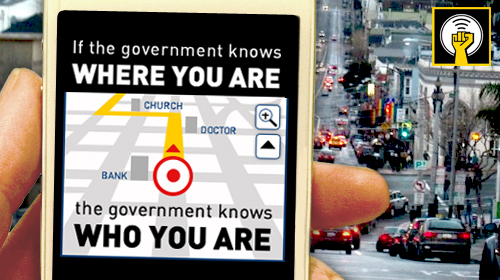
The ACLU has just released the results of our affiliates’ public records requests to hundreds of police departments around the country asking them about their cell phone tracking policies.
What we have learned is disturbing. Many of the approximately 200 law enforcement agencies that responded said they track cell phones without a warrant. As The New York Times reports, this invasive form of surveillance often happens without any court oversight at all.
A small number of agencies, such as in North Las Vegas and Wichita, said they do obtain warrants based on probable cause before tracking. Others, such as the Kentucky State Police, said they use varying legal standards, such as a warrant or a less-strict subpoena. The result is unclear or inconsistent legal standards from town to town that frequently fall short of probable cause.
The government should have to get a warrant before tracking cell phones. That is what is necessary to protect Americans’ privacy, and it is also what is required under the Constitution.
The fact that some law enforcement agencies do get warrants shows that a probable cause requirement is a completely reasonable and workable policy, allowing police to protect both public safety and privacy.
Last August, in an unprecedented effort to penetrate the secrecy around the policies, 35 ACLU affiliates around the country filed over 380 requests under states’ freedom of information laws. The ACLU asked state and local law enforcement agencies about their policies, procedures and practices for tracking cell phones. An in-depth summary of what we found, with links to documents, is here.
The responses varied widely, and many agencies did not respond at all. The documents included statements of policy, memos, police requests to cell phone companies (sometimes in the form of a subpoena or warrant), and invoices and manuals from cell phone companies explaining their procedures and prices for turning over location data. There’s a map with links to the documents and requests state-by-state here.
The documents provide an eye-opening view of police surveillance of Americans. In Wilson County, N.C., police obtain cell phone tracking data where it is “relevant and material” to an ongoing investigation – a standard much lower than probable cause. Police in Lincoln, Neb., without demonstrating probable cause, obtain even GPS location data, which is more precise than cell tower location information. In Tucson, Ariz., police sometimes obtain cell phones numbers for all of the phones at a particular location at a certain time (this practice is known as a “tower dump”).
The U.S. Supreme Court in January held in U.S. v. Jones that prolonged location tracking is a search under the Fourth Amendment, but the effects of that ruling on law enforcement have yet to be seen.
The ACLU supports bipartisan legislation currently pending in both the House of Representatives and the Senate that would address this problem called the Geolocation Privacy and Surveillance (GPS) Act. It would require law enforcement officers to obtain a warrant to access location information from cell phones or GPS devices. It would also mandate that private telecommunications companies obtain their customers’ consent before collecting location data. At least 11 state legislatures are also considering bills related to location tracking.
Technology is evolving quickly, and often to the detriment of privacy. How much privacy Americans enjoy is a choice that ultimately is ours as a society to make.
Related Issues
Related Content
-
Press ReleaseOct 2026
National Security
Free Speech
Cair And Cair-florida Urge Court To Temporarily Block Unconstitutional Terrorism Designation Before More Harm Is Done. Explore Press Release.CAIR and CAIR-Florida Urge Court to Temporarily Block Unconstitutional Terrorism Designation Before More Harm is Done
TALLAHASSEE — The U.S. District Court for the Northern District of Florida heard arguments today in a lawsuit challenging Florida officials’ baseless and unconstitutional designation of the Council on American-Islamic Relations (CAIR) and its Florida chapter as “domestic terrorist organizations.” Unless the court intervenes to prevent it, the largest Muslim civil rights organization in the country will have to shut their doors in Florida on Nov. 5. “CAIR and CAIR-Florida are critical resources that people and institutions across Florida rely on to protect civil rights and liberties, and all we want to do is get back to that important work,” said Hiba Rahim, executive director of CAIR-FL. “Florida’s new law silences free speech, criminalizes association, and eradicates due process, and we are hopeful that the court will act to safeguard our constitutional rights. History reminds us that our country has endured dark chapters, but also that people who refused to accept injustice moved us closer to our founding ideals.” At today’s hearing, the American Civil Liberties Union (ACLU) urged the court to grant emergency relief for the organizations, explaining the instant and debilitating harm CAIR and CAIR-FL will face if the court does not rescind the designation and stop it from going into effect. In the alternative, they are asking the court to prevent Florida state prosecutors from enforcing the law’s harsh criminal penalties against the nonprofits and third parties who associate with and support them. As the ACLU argued in court, CAIR and CAIR-Florida have done nothing to deserve this devastating designation. The state has never indicted, much less convicted, either CAIR or CAIR-Florida under any criminal law — and certainly not a criminal law involving the serious charge of terrorism. If the state tried to do so, it would fail. The reason is simple: Neither CAIR nor CAIR-Florida is engaged in terrorist activity, and the state would be unable to prove its case to a jury in a court of law. “Florida’s new law is an unprecedented abuse of state authority,” said Ashley Gorski, senior counsel with the ACLU’s National Security Project. “It gives state officials sweeping power to punish American organizations they brand as ‘terrorists,’ without due process and in violation of the First Amendment. We’re asking the court to block this unconstitutional law and ensure that our clients’ crucially important civil rights work serving Floridians is not silenced.” Once a designation becomes effective, an organization’s lawful, constitutionally protected speech and association are immediately rendered illegal and impossible. Under HB 1471, five Florida executive officials have the power to designate and debilitate U.S. groups — including nonprofits engaged in First Amendment-protected advocacy — without filing charges, initiating judicial proceedings, proving their case beyond a reasonable doubt, submitting the case to a jury, or complying with any of the other required constitutional protections of the criminal legal system. An elaborate set of prohibitions makes it a serious crime for the targeted American organization to do virtually anything in the state, and for others to work for or otherwise actively associate with or support the designated group. The consequences of violating these prohibitions are severe, including up to life imprisonment. “Florida’s designation of CAIR and CAIR-Florida flies in the face of fundamental rights guaranteed to all Americans by the Constitution,” said Scott McCoy, deputy legal director at SPLC. “All Floridians should be concerned that this law allows Florida officials to do an end run around the Constitution, shut down disfavored speech and advocacy, and impose draconian criminal penalties. If they are permitted to do it to these civil rights nonprofits, what’s to stop them from doing it to any Floridian with whom they disagree?” The impact on the Floridian communities CAIR and CAIR-Florida serve would also be immense. CAIR-Florida provides a range of pro bono legal services to Florida residents, including those who suffer government and workplace discrimination in violation of their civil rights, as well as those navigating the immigration system. “The state does not get to decide whose speech is constitutionally protected or whose due process rights deserve respect. The Constitution decided that long ago,” said Daniel Tilley, legal director of the ACLU of Florida. “And Florida must not strip CAIR and CAIR-FL of their ability to advocate and organize for the civil rights of Floridian Muslims. This dangerous designation regime, crafted by the DeSantis administration, seeks to criminalize protected speech, plain and simple — and with no regard for the harm it causes to the thousands of people our clients support and serve. We are proud to stand with our clients against this abuse of state power.” CAIR and CAIR-Florida are represented by the ACLU, ACLU of Florida, the Southern Poverty Law Center, and Bondurant Mixson & Elmore LLP. This press release can be found here: https://www.aclu.org/press-releases/cair-and-cair-florida-urge-court-to-temporarily-block-unconstitutional-terrorism-designation-before-more-harm-is-done -
Press ReleaseOct 2026
National Security
Human Rights
Families Of Trinidadian Men Killed One Year Ago By Trump Administration Call For Justice. Explore Press Release.Families of Trinidadian Men Killed One Year Ago by Trump Administration Call for Justice
NEW YORK – On the one-year anniversary of the Trump administration’s murder of two Trinidadian men killed in a U.S. missile strike last October, their family members are demanding justice and accountability. At least 239 people have been killed in these strikes since September 2025. On Oct.14, 2025, Chad Joseph and Rishi Samaroo were returning from Venezuela, where they were working on farms and as fishermen, to their homes in Las Cuevas, Trinidad and Tobago, when a missile struck their boat. Four other people also died in the strike. The ACLU, Center for Constitutional Rights, and other partners are representing Lenore Burnley, Mr. Joseph’s mother, and Sallycar Korasingh, Mr. Samaroo’s sister, in their wrongful death suit. The families are suing under a federal statute called the Death on the High Seas Act, a law that allows family members to sue for wrongful deaths occurring in international waters. “The last year has been devastating without Chad in our lives. Chad was the heart of our family. He was loving, generous and caring, and always there for us. We all miss him terribly,” said Mr. Joseph’s mother, Lenore Burnley. “A year later, we are still grieving and seeking justice for his death. We will always mourn losing Chad but hope that this lawsuit will be a step towards justice for him and the family.” Prior to his murder, 26-year-old Mr. Joseph lived with his wife and their three children in Las Cuevas, Trinidad. To support his family, he often traveled the 20 nautical miles from his home to Venezuela for work on a farm, fishing, and other odd jobs. On October 12, he called his wife to let her know that he had found a boat ride home from Venezuela and would see her in a couple of days. On October 14, his wife and mother saw social media reports of a boat strike; fearing that the boat was his, they repeatedly called him but got no reply. His family never heard from him again. Mr. Samaroo was born in El Socorro, Trinidad, where his elderly father, eight younger siblings, and two of his three sons still reside. His elderly mother lives nearby in San Juan. In 2024, he was released early from prison after serving a 15-year sentence. After paying his debt to society, Mr. Samaroo worked hard to make an honest living. In August 2025, he began working on a farm in Venezuela, taking care of goats and cows and making cheese. He would call his family almost every day when he was in Venezuela, and in an Oct. 12 call with Ms. Korasingh, he told her he’d be home soon to help her take care of their ailing mother. Just like Mr. Joseph, that was the last time Ms. Korasingh or anyone else in the family heard from him. “Not a day goes by when our family doesn’t think about our brother Rishi,” said Sallycar Korasingh, Mr. Samaroo’s youngest sister. “Rishi was a good person, loved by his family and community. The last year without him in our lives has been heartbreaking. My brother and family deserve justice. We will continue fighting for answers and the accountability we deserve.” The Trump administration has claimed, without proof, that these military strikes are targeting unnamed drug cartels. However, even if these boats did carry drugs, neither domestic nor international law authorizes the use of military force against criminal organizations. The strikes are thus premediated killings of civilians outside of armed conflict, constituting murders under domestic law and extrajudicial killings under international human rights law. “For a year now, our clients have had to live without their loved ones and without justice in the name of President Trump’s lawless killing campaign,” said Jeff Stein, staff attorney with ACLU’s National Security Project. “These illegal strikes at sea have devastated countless families, terrified communities, and made us all less safe. We won’t stop fighting for accountability. We urge leaders in both Congress and the executive branch to finally end this illegal campaign before anyone else is killed.” The ACLU and Center for Constitutional Rights are also suing for a secret Trump administration legal memorandum that reportedly blesses the strikes as lawful and purports to immunize personnel who authorized and carried out the strikes from future criminal prosecution. However, just this month, a federal court rejected several of the Trump administration’s key rationales for withholding this memo and ordered the government to provide additional details about who has seen the memo and how it has been used. The judge also ordered the government to privately give him the memo, so he can determine whether it should be released publicly. The government was given until today, Oct. 14, to comply with his order. While the Trump administration agreed to turn the memo over to the judge for his private review today, it asked the judge to reconsider the other aspects of his order. On Friday, Oct. 16, the ACLU and the Center for Constitutional Rights will file a brief opposing the government’s attempt to avoid compliance with the judge’s order. “Even as one year has gone by, and despite so many intervening Trump administration atrocities, we must not forget the administration’s unprecedented campaign of serial murders of civilians on the seas,” said Baher Azmy, Legal Director of the Center for Constitutional Rights. “This lawless campaign has left so many families broken, and, in their names, accountability under law for individuals responsible for murder will someday come.” The ACLU and Center for Constitutional Rights have also called on international human rights bodies, such as the Inter-American Commission on Human Rights, to investigate the strikes and hold the perpetrators accountable. -
Press ReleaseOct 2026
National Security
Free Speech
Muslim Civil Rights Organizations In Florida Urge Court To Block Unconstitutional Terrorism Designation. Explore Press Release.Muslim Civil Rights Organizations in Florida Urge Court to Block Unconstitutional Terrorism Designation
TALLAHASSEE — On Friday, the Council on American-Islamic Relations (CAIR) and CAIR-Florida told a federal court that their civil rights work in Florida is in imminent danger after Gov. Ron DeSantis and other Cabinet officials baselessly voted to designate them as “domestic terrorist organizations” under an unconstitutional new state law. They asked the court for emergency relief to block the designation from going into effect. The filing comes in a new lawsuit the groups filed after the Florida Cabinet’s vote. “For decades, we and CAIR-Florida have pursued a shared mission, rooted in faith, to help people understand Islam, protect civil rights, promote justice, and empower the millions of American Muslims across the country,” said CAIR. “Gov. DeSantis and other officials in his cabinet have spent months targeting us for our beliefs and civil rights work for months. If this unjustifiable designation is allowed to go into effect, our speech will be silenced, our advocacy will be halted, and our doors will be shut in Florida. This harms not only CAIR and CAIR-Florida, but all Floridians who believe in a vibrant constitutional democracy where people of all religious traditions can thrive.” Under HB 1471, five Florida executive officials have the power to designate and debilitate U.S. groups—including nonprofits engaged in First Amendment-protected advocacy—without filing charges, initiating judicial proceedings, proving their case beyond a reasonable doubt, submitting the case to a jury, or complying with any of the other constitutional requirements of the criminal legal system. As the lawsuit explains, “The new regime transforms Florida’s Governor, Chief of Domestic Security, and Cabinet into judge, jury, and nonprofit executioner.” Once designated, an elaborate set of prohibitions makes it a serious crime for the targeted American organization to do virtually anything in the state, and for others to work for or otherwise actively associate with it. The consequences of violating these prohibitions are severe, including up to life imprisonment. As a result of designation, an organization’s lawful, constitutionally protected speech and association are immediately rendered illegal and impossible—simply because a handful of state officials say so. “We’re asking for urgent judicial intervention to prevent CAIR and CAIR-Florida from becoming the first casualties of Florida’s unconstitutional and draconian new law,” said Hina Shamsi, director of ACLU’s National Security Project. “The Constitution does not allow officials to punish U.S. organizations and deny them due process because of disagreement with their views, yet Florida’s Governor and Cabinet did so anyway. It’s hard to overstate the stakes here, not only for our clients, but also for other nonprofits and corporations that Florida officials may decide they dislike and want to target in the future.” CAIR and CAIR-Florida initially challenged their designation under the new Florida law in a suit filed on July 1, the day the law went into effect, and Gov. DeSantis said he and other Cabinet officials would move quickly to designate CAIR. On October 1, the court dismissed their initial case, finding that the nonprofits did not have standing in July because their fears of harm were speculative. Hours later, counsel for CAIR and CAIR-Florida filed a new complaint, explaining that Gov. DeSantis and other Cabinet members had followed through on their threats and voted to designate CAIR and CAIR-Florida on September 29, 2026. The complaint makes clear that this designation violates the non-profits’ First Amendment rights, as well as their right to due process and right to counsel. Targeted organizations receive no meaningful notice and have no meaningful opportunity to defend themselves before the designation and harsh penalties take effect. Florida’s law is also preempted by federal law. “Without evidence, fair notice, or any opportunity to respond, Florida officials have arbitrarily and unjustly branded CAIR and CAIR-Florida with the scarlet letter of a ‘DTO’ designation, effectively rendering them pariahs.” said Scott McCoy, deputy legal director, Southern Poverty Law Center. “This designation is a political act that violates the First Amendment and due process rights of two nonprofit organizations that have served Floridians for more than 25 years. If state officials can do this to CAIR and CAIR-Florida with impunity, they can do it to any organization whose message they dislike.” The designation, which effectively criminalizes the existence of any labeled organization, is set to go into effect on November 5. If it does, the impact on CAIR and CAIR-Florida would be immediate and devastating. In their October 2 motion for emergency relief, the nonprofits are asking that the court order Florida officials to rescind their designation of CAIR and CAIR-Florida and prevent it from going into effect. In the alternative, they are asking the court to prevent Florida state prosecutors from enforcing the law’s harsh penalties against the nonprofits and third parties connected with them. The impact on the Floridian communities CAIR and CAIR-Florida serve would also be immense. CAIR-Florida provides a range of pro bono legal services to Florida residents, including those who suffer government and workplace discrimination in violation of their civil rights, as well as those navigating the immigration system. They help register people to vote, dispel and counter false stereotypes, prejudices, and disinformation, of Muslims, and advocate for human rights. For example, CAIR and CAIR-Florida supported the campaign to bring back Mohammed Ibrahim—a 16-year-old U.S. citizen from Florida—who was unjustly detained by Israel in February 2025 for almost ten months. “No state government should hold the power to unilaterally extinguish domestic advocacy organizations because of their First Amendment-protected activity,” said Daniel Tilley, legal director, ACLU of Florida. “Our democracy depends on freedom of speech and association and is fueled by those who advocate for their communities. For decades, CAIR and CAIR-Florida have sought to support a vibrant constitutional democracy where people of all religious traditions can thrive. This baseless designation will substantially harm the thousands of American Muslims who rely on CAIR’s advocacy — and we refuse to let it stand.” CAIR and CAIR-Florida have done nothing to deserve this devastating designation. As the complaint explains, the state has never indicted, much less convicted, either CAIR or CAIR-Florida under any criminal law—and certainly not a criminal law involving the serious charge of terrorism. If the state tried, it would fail. The reason is simple: neither CAIR nor CAIR-Florida is engaged in terrorist activity, and the state would be unable to prove its case in a court of law. CAIR and CAIR-Florida are represented by the ACLU, ACLU of Florida, the Southern Poverty Law Center, and Bondurant Mixson & Elmore LLP. -
Press ReleaseOct 2026
National Security
Court Rejects Bulk Of Trump Administration's Rationale For Keeping Boat Strikes Memo Secret. Explore Press Release.Court Rejects Bulk of Trump Administration's Rationale for Keeping Boat Strikes Memo Secret
NEW YORK — Today, the U.S. District Court for the Southern District of New York rejected several of the Trump administration’s key rationales for withholding an Office of Legal Counsel (OLC) opinion that it is using to justify its ongoing extrajudicial boat strike campaign, which has murdered 234 people. The court also ordered the government to provide additional details about who has seen the memo and how they have used it, and to turn the memo over to the court so the judge can determine whether it should be released publicly. The judge gave the government until October 14 to comply with his order. The court found that the administration has adopted the memo as its “working law,” noting that “the assembled record compellingly supports the finding that DOD—the agency that asserts disclosure authority over the Memo—has treated the Memo as its effective law and policy governing the boat strikes.” However, the court also ordered the administration to provide it with further information so that it may rule on whether the memo is protected as a closely held presidential advice document. This decision comes months after the American Civil Liberties Union, the New York Civil Liberties Union, and the Center for Constitutional Rights sued to force disclosure under the Freedom of Information Act (FOIA). “The public deserves to know how our government is justifying the cold-blooded murder of hundreds of civilians. Today’s order is a huge step in the right direction of ensuring that the government does not get to summarily execute people based on secret law,” said Jeffrey Stein, staff attorney with the ACLU’s National Security Project. The still-secret memo reportedly blesses the ongoing strikes as lawful acts in an alleged “armed conflict” with unspecified “drug cartels,” and also purports to immunize personnel who authorize or take part in these unlawful strikes from future criminal prosecution for what would otherwise be considered homicide. “No president can arbitrarily assassinate people from the sky based on their sole say-so,” said Center for Constitutional Rights Legal Director Baher Azmy. “If the OLC opinion seeks to dress up the obvious illegality of these serial murders in legalese to provide Trump cover, the public needs to see that analysis and ultimately hold accountable all those who facilitate murder in the United States’ name.” The court held that the Department of Defense has expressly adopted the legal reasoning in the OLC memo as binding on the agency, which means that the memo cannot be maintained as “secret law.” Among other conclusions, the ruling rejected the government’s claim that it could withhold the OLC memo from the public as privileged under the deliberative process and attorney-client privileges. “Today’s order rejects most of the Trump administration’s grounds for its illegal, barbaric bombing of civilians in secrecy — this is a strong step in the right direction,” said Perry Grossman, supervising attorney at the New York Civil Liberties Union. “We trust that the court will ultimately give the public the opportunity to see the government’s alleged justification for this unlawful murder campaign.” In addition to this FOIA lawsuit, the ACLU and the Center for Constitutional Rights have also filed a lawsuit on behalf of two families from Trinidad & Tobago who are seeking redress after a U.S. boat strike killed their loved ones.