A Conversation with an Election Expert: Breaking Down This Year’s Election Process
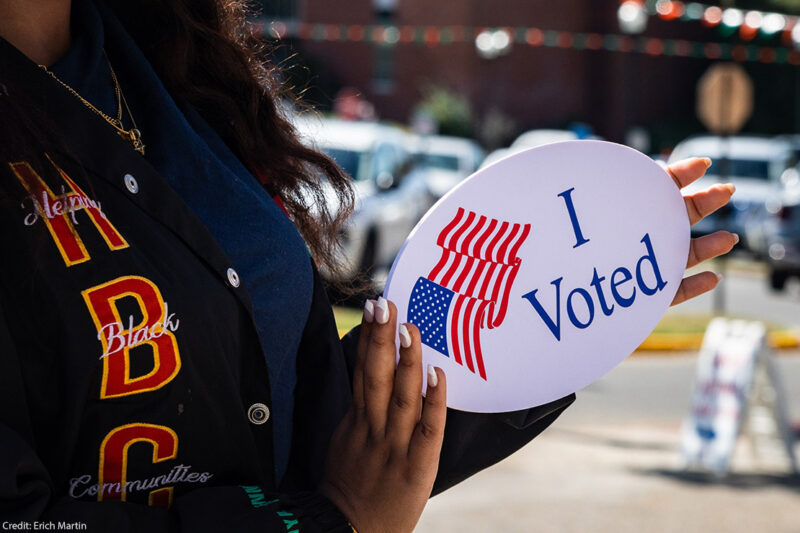
Voting should be a safe, fair, stress-free process for everyone. Whether you mail your ballot early or head to the polls in person, your vote must be counted and your voice heard. Ahead of Election Day, however, voters may be filled with skepticism and concern as they worry about potential ballot seizures, vote tampering, and even ICE showing up nearby local polling places.
Loyola Law School professor Justin Levitt is addressing that apprehension. Levitt has worked in the elections space for almost 25 years across government departments, academia, and nonprofits. He served as the White House’s first senior policy advisor for democracy and voting rights from 2021–2022 and as a deputy assistant attorney general in the Civil Rights Division of the U.S. Department of Justice from 2015–2017. And while he acknowledges the many anxieties around voting in 2026, he assures readers that this Election Day will be typical and offers practical tips and advice to make a voting plan.

Voting Rights
Federal Agents at the Polls
Voting Rights
Federal Agents at the Polls
Levitt spoke with Arman Abrishamchian, rapid response communications strategist at the ACLU, about what happens behind the scenes after you cast your ballot, steps to make sure your vote counts, and helpful resources to prepare for Election Day. The conversation with Levitt has been edited for length and clarity.
Why are free and fair elections so important to this country?
If you care about any policy whatsoever — health care, education, national security, jobs, the economy, potholes on the road, trash pickup — then you care about free and fair elections. The way that we decide to do things and not to do things together in this country is through elections. We put ourselves in charge of building the world that we want to live in, and all of that starts with having an election that reliably counts the preferences of the public.
There is no better way to experience small “d” democracy than seeing neighbors help neighbors, cast their votes, and express their preferences. It is the most reassuring thing.
If people want to mitigate any risk of election interference, what would you recommend?
One, make a plan to vote. It doesn’t have to be big and complicated, but understand how you’re going to actually do it, whether you vote early, in person, or by mail. Two, if you have the time and it’s available in your area, vote early. The earlier that you get your ballot in, the more sure you can be that there’ll be absolutely no disruption.
After someone casts their ballot and it’s being tabulated, what is happening behind the scenes?
Behind the scenes at an election office, there are plenty of things that are designed to make sure election officials record your ballot as you intended. First, if you’re submitting a ballot by mail, they’re going to check the envelope and make sure that the person who says they’re casting the ballot actually cast the ballot. Then, they’re going to open it up and make sure that there aren’t mistakes or tears or coffee stains. Then, they’re going to tabulate those preferences, often with an audit to make sure that the machines get the answer right. And then there are going to be a number of different checks and safeguards — belts and suspenders designed to make sure that when you cast your ballot, it’s registered.
Are you worried about ICE being at the polls?
I’m worried about people being worried about ICE at the polls. I’m worried that people will be so anxious that they won’t want to participate, that they’ll give up their own voice and their own agency. But this country is very, very big — even individual cities are very big — with 100,000 polling places spread out over 3.8 million square miles. The logistics make our elections hard to disrupt. You haven’t heard anything at all about disruptions for the more than 40 million people who have already voted early, and that’s because it’s been remarkably unremarkable.
For the vast majority of Americans, the experience at the polls will be spectacularly, delightfully normal. And for those still worried, I think there is comfort in community. Courage is contagious, and if people understand that they can go with others to the polls, I think what they’ll find is very much what they’re used to.
I can tell you that election officials this year are as prepared as they have ever been so that you don’t have to be. They’re planning ahead. They know what they’re going to do in every possible scenario so that the process for you as a voter is as smooth as it regularly is.
How do you vote? What’s your routine like if you have one?
I vote by mail. I like dropping my ballot off at the drop box because it makes me feel good. I vote early because on Election Day I’m driving around, dropping off coffee and donuts for poll workers. We have a bunch of students at Loyola Law School who are going to be serving as poll workers in the election, and so I get to play poll worker Santa.
There are people in power across the country and in DC who have tried their hardest to undermine some people’s votes. Have they succeeded in diminishing the power of individuals’ votes? How can you counter that gut feeling?
None of this is normal and I don’t want to gaslight you into pretending it’s not happening. But there’s a big difference between attempts to disrupt the election process and those attempts working. And I can tell you across the board, they haven’t been working. They’re not working and they’re not going to work.
It’s disturbing we’re even having these conversations. This is not a normal conversation for normal times. But the president and this administration are trying to project power they do not have. And in doing that, they’re trying to make us forget that we’re in charge here, that this election’s up to us, that we have agency. The president just doesn’t have the knobs or levers or buttons to “magic” away Americans’ ability to cast ballots locally and to express their preferences about who we want to lead us. These are our elections. And all of the noise in the world, if we can just shut out the noise, isn’t going to change that.
Should people be worried about what’s going on in the Department of Justice right now?
I used to work at the Justice Department, and they used to be a pretty feared litigating entity. But I’ll tell you, the reason that the Department of Justice is so feared and respected isn’t the name on the outside of the building; it’s the quality of the work inside. And tragically, that quality has changed. Over the last two years, a lot of people who actually know what they’re doing have left, and that’s left a lot of people who don’t know what they’re doing. That’s disturbing for the long-term capacity of the department, but it’s manifested in a real lack of power in the courts.
The Department of Justice really does its work when the courts listen, and the courts aren’t buying what they’re selling, across the board. Judges appointed by Democrats, by Republicans, even by this president aren’t buying what the Department of Justice is selling. They’ve got a lot of bluster and a lot of noise, but they’re not producing many results.
Are there voting and election resources you’ve seen that are really useful?
The best source of information is the most trusted source of information: your local election officials. If you’ve got questions, they’re the best place to turn.
Voting Rights
Your Questions Answered: How the ACLU Is Safeguarding the 2026 Midterms
Voting Rights
Your Questions Answered: How the ACLU Is Safeguarding the 2026 Midterms
For people looking to understand more about how the elections are going to work and how you can make sure that people in your community are able to express their voices at the polls, the ACLU compiled frequently asked questions around voting. It’s a wonderful way to spend time right before Election Day understanding how the process is going to work.
Related Issues
Related Content
-
Press ReleaseNov 2026

Voting Rights
Voting Rights Groups Win Case To Protect Alaska’s Election Certification. Explore Press Release.Voting Rights Groups Win Case to Protect Alaska’s Election Certification
Anchorage, AK – The American Civil Liberties Union, ACLU of Alaska, Common Cause, and League of Women Voters of Alaska issued statements today after a federal judge rejected the Department of Justice’s last-minute attempt to block Alaska’s Senate election results if the Republican candidate did not win. “This desperate attempt to disenfranchise Alaska voters has been swiftly thrown out of court, and that is a win for democracy,” said Ari Savitzky, senior staff attorney with the ACLU’s Voting Rights Project. “The court’s get-out-and-don’t-come-back ruling makes clear that preemptively blocking election results and running an inquisition into the sincerity of voters’ choices would be flatly illegal. Every American should be alarmed that their own Justice Department tried to put voters on trial for how they might vote. That should never happen in this country. The rule of law held, and voters should go to the polls with their heads held high. Common Cause, the League of Women Voters of Alaska, and individual Alaska voters, represented by the ACLU National Voting Rights Project and the ACLU of Alaska, intervened to protect the voting rights of Alaskans. The ruling rejects DOJ’s lawsuit because the relief the federal government sought was illegal and would have disrupted Alaska’s elections on the eve of voting and violated Alaskans’ right to a secret ballot. “This ruling is a victory for the people of Alaska, reaffirming their voices will be heard, and their votes will be counted,” said Virginia Kase Solomon, president and CEO of Common Cause. “The Trump administration keeps trying tricks to interfere in our election, but they keep failing because our democracy and people-power is strong. Common Cause will continue to defend Americans’ freedom to vote in free and fair elections because politicians don’t dictate election outcomes, people do.” “Today the court upheld our most fundamental voting rights by dismissing the federal government’s frivolous lawsuit,” said Lu-Anne Haukaas Lopez, Executive Director for the ACLU of Alaska. “The decision affirmed what we already know: Alaskans – not the president- decide our elections. The ACLU of Alaska is watching this election closely for other attempts to undermine our elections. We remain committed to protecting and defending the voting rights of all Alaskans.” “We are grateful the district court defended democracy today by dismissing this groundless, frivolous lawsuit,” said Celina Stewart, CEO of the League of Women Voters. “The voters of Alaska have the right to decide who represents them in the United States Senate, and the Department of Justice has no right to interfere through its groundless demands.” Counting every vote takes time, and it’s unlikely that Alaskans will have final results on Election Night. Alaska election officials follow strict state laws that include steps for receiving, checking, processing, counting, reviewing, and certifying ballots. Some ballots, including mail ballots or ballots that require verification, may take longer to count. Election officials are required by law to certify the election results. -
TexasOct 2026
Voting Rights
Potter County Republican Party V. Benge. Explore Case.Potter County Republican Party v. Benge
Exactly one week before the November 3, 2026, midterm elections, the Potter County Republican Party filed a baseless lawsuit challenging the vote tabulation and certification processes counties across Texas have used without flaw for years. They seek an order mandating a hand count of paper ballots across all Texas counties, the results of which a court must confirm, before certification of the U.S. senate race in Texas can proceed. Representing the NAACP Texas State Conference, the League of Women Voters of Texas, MOVE Texas Civic Fund, and Common Cause, the ACLU, the ACLU of Texas, the Lawyers’ Committee for Civil Rights Under Law, and the Carter Law group moved to intervene in this lawsuit to defend voters’ interests in the accurate and timely counting of their votes. -
Press ReleaseOct 2026
Voting Rights
Voting Rights Groups Files For Emergency Relief For Gwinnett County Voters Subjected To Delays In Absentee Voting. Explore Press Release.Voting Rights Groups Files For Emergency Relief for Gwinnett County Voters Subjected to Delays in Absentee Voting
ATLANTA — Voting rights organizations, including the American Civil Liberties Union, ACLU of Georgia, Southern Poverty Law Center (SPLC), and Legal Defense Fund (LDF), filed an emergency lawsuit on behalf of nearly 2,000 Gwinnett County voters who are on the brink of being denied their ability to vote by absentee ballot in the Nov. 3 midterm elections. The suit, which was filed against the Gwinnett County Board of Registrations and Elections, alleges that Nathan Doyle Huntington and 1,819 other lawfully registered Gwinnett County voters did not receive their requested absentee ballots on time, resulting in return rates drastically below the state average. The alleged delays have primarily impacted ballots issued after Oct. 6 and extend into Cobb and DeKalb counties, affecting about 10,000 voters in total. “No voter should lose their voice because an absentee ballot they requested never made it to their mailbox,” said Will Hughes, staff attorney, ACLU Voting Rights Project. “With Election Day just days away, Gwinnett County voters deserve immediate action to ensure they have a meaningful opportunity to cast their ballots and have them counted. We’re asking the court to step in because protecting the right to vote means making sure every eligible voter can actually exercise it.” The suit urges the court to act quickly and defend voters from the failure of the Board of Registrations and Elections to issue absentee ballots in accordance with the law. To ensure all Gwinnett County residents who requested to vote absentee are able to do so, the suit demands that the board: Send an absentee ballot by overnight mail to each affected voter whose ballot is still outstanding, including prepaid overnight return mailing, by 1 p.m. on Oct. 31. Notify potentially impacted voters of their options to ensure their ballots are counted. Accept and tabulate the absentee ballots of all affected voters that are received by Nov. 6, the statutory deadline for curing absentee ballots and for receipt of ballots from overseas and military voters for this election, provided they are postmarked by Nov. 3. However, the court has not ruled yet, and impacted voters should contact the Gwinnett County Board of Registrations and Elections immediately and request an overnight ballot to ensure their ballots are received. Absentee voters can contact the board at 678-226-7210 or Absentee@GwinnettCounty.com. “It is unacceptable that voters are experiencing delays of this scale when voting by absentee,” said Bradley Heard, deputy legal director, SPLC. “Absentee voting is an invaluable mechanism for voters who may otherwise be unable to cast their ballot. Gwinnett County voters, particularly voters of color, will not be deterred from having their voices heard this election, and we will do everything in our power to get their ballots counted.” “Gwinnett County has a responsibility to voters but has refused so far to take all reasonable steps to rectify a known delay with absentee ballots,” said Pilar Whitaker, senior counsel, Legal Defense Fund. “Eligible voters in the county are on the brink of being disenfranchised at a time when the right to vote has already endured attacks on all sides.” “Absentee voters in Gwinnett, through no fault of their own, face the imminent loss of their right to vote in the 2026 general election. Folks should be able to count on their government to do the bare minimum the law requires: Mail absentee ballots on time,” said Raneem Ashrawi, staff attorney, ACLU of Georgia. “The right to vote is our most fundamental constitutional right and the bedrock of all other rights. Gwinnett voters eligible to vote absentee should not pay the steep price of losing their voice because of failures by their local board of elections.” The filing can be found here. -
CaliforniaOct 2026
Voting Rights
Oca-asian Pacific American Advocates V. Department Of Homeland Security. Explore Case.OCA-Asian Pacific American Advocates v. Department of Homeland Security
The Department of Homeland Security and United States Citizenship and Immigration Services are subjecting thousands of naturalized American citizens to improper investigations questioning their voting eligibility, and they’re using outdated, faulty data and methods to do so. As a result, these citizens face increasing, unwarranted scrutiny from the federal government and, potentially, disenfranchisement. We’re challenging these unlawful actions and the unreliable data behind them to ensure no eligible voter is targeted or silenced because of them.