
How to Win an Election From Jail
January 13, 2022
Joel Castón was incarcerated when he was 18 years old. He’s now 45 and in November of last year, just two months ago, Joel was released after serving over 26 years. While incarcerated, he received a degree through the Georgetown Prison Scholars Program and started a mentorship initiative called Young Men Emerging. And, because D.C. changed the law to allow incarcerated people to vote, he ran for office, and he won: he is now an Advisory Neighborhood Commissioner in Washington D.C. representing the 7th Ward including the jail that he just walked out of. He’s the first incarcerated person in D.C. history to win elected office. Joel joins us today to talk about his experience, what he’s focusing on as a newly elected commissioner in D.C., and how he’s changing the public narrative about incarcerated people.
In this episode


This Episode Covers the Following Issues
Related Content
-
New YorkMar 2026

Civil Liberties
Poe Et Al. V. Harris-madden Et Al.. Explore Case.Poe et al. v. Harris-Madden et al.
The ACLU, NYCLU, Family Justice Law Center, Brooklyn Defender Services, Center for Family Representation, NYU School of Law Family Defense Clinic, and Sullivan & Cromwell have filed a federal class action lawsuit on behalf of three New York parents challenging unconstitutional delays in the appeals process for reports on the Statewide Central Register of Child Abuse and Maltreatment (SCR). Parents who challenge their placement on the registry often wait months—sometimes more than a year—for a final decision. While they wait, they can be shut out of jobs in childcare, education, healthcare, and other fields involving children, and barred from adopting or fostering. Low-income parents, parents of color, and disabled parents are disproportionately policed by the family regulation system—also known as the child welfare system—and more likely to end up on the registry. This lawsuit seeks to ensure that parents have a way to clear their names in a timely manner. -
Press ReleaseFeb 2026

Civil Liberties
Congressional Scorecard Details Pro- And Anti-civil Liberties Votes In Congress Since 2025. Explore Press Release.Congressional Scorecard Details Pro- and Anti-Civil Liberties Votes in Congress Since 2025
WASHINGTON – The American Civil Liberties Union today released its Congressional scorecard detailing votes in the U.S. House of Representatives and U.S. Senate that affected civil rights and civil liberties since 2025. The start of the 119th Congress coincided with the start of President Trump’s second term, which has brought new attacks on civil rights and civil liberties. In 2025, the ACLU scored 12 bills in the House of Representatives and 7 in the Senate, including: H.R. 1, which cut hundreds of billions of funding for Medicaid to supercharge immigration enforcement. Opposed by the ACLU, the bill was signed into law by President Trump. S. Amdt. 2814, which struck the ban on state AI regulations from H.R. 1. The ACLU supported, and the amendment was passed. H.R. 498, which sought to prohibit Medicaid coverage for gender-affirming medical care for minors. The bill was opposed by the ACLU and passed the House but did not receive a vote in the Senate. S. 5, which requires the government to detain non-citizens who have been accused, not convicted of, nonviolent offense. The ACLU opposed, and the bill was signed into law by President Trump. “In 2025, Congressional leadership – emboldened by President Trump’s radical agenda – took every opportunity to divide our communities, attack the most vulnerable among us, and advance wildly unpopular policies,” said Elvia Montoya, deputy national director of policy & government affairs at the ACLU. “Everyone in this country deserves opportunity, dignity, freedom. When members of Congress fight for those values, they should be recognized, and when they attack the underpinnings of our freedom, they should hear from those they represent. The ACLU's millions of members and supporters care passionately, and this scorecard gives them the information they need to make sure Congress stands up for civil rights and civil liberties.” The ACLU hosted 41 Congressional briefings; organized 206 constituent meetings with Congressional offices; organized 12 lobby days; and sent 54 policy explainers to lawmakers, in addition to spending countless hours providing expert advice to lawmakers and staff. And backed by its People Power activist program and advocates across the country, the ACLU generated over 3 million online digital actions, petitions, sign-up forms, and messages to legislators – including over 56,000 constituent calls. As a result of these efforts, the ACLU was able to move key members on issues such as transgender rights and immigrants’ rights. The ACLU scored six federal anti-immigrant bills and amendments and helped prevent 83 percent of them from becoming law as members saw the unpopularity of Trump’s policies. And despite several anti-LGBTQ bills being introduced, all efforts to establish new statutory restrictions on gender-affirming care were blocked, and two bills that threatened free speech were ultimately defeated. The ACLU will make sure that lawmakers earn recognition when they defend our rights and hear from constituents when they threaten our freedoms. The scorecard is available here: https://www.aclu.org/congressional-scorecards -
New Mexico Supreme CourtFeb 2026
Civil Liberties
Atencio V. State Of New Mexico. Explore Case.Atencio v. State of New Mexico
This case asks whether the State of New Mexico’s actions enabling pollution from oil and gas extraction, and its failure to control that pollution, violate the New Mexico Constitution’s Pollution Control Clause, Inherent Rights Clause, Due Process Clause, and Equal Protection Clause. Our brief urges the New Mexico Supreme Court to answer those questions by retiring its “interstitial approach” to state constitutional interpretation—which looks first to federal doctrine when interpreting state constitutional provisions that arguably have U.S. Constitutional analogues—and instead interpreting the New Mexico Constitution holistically and independently. This independent approach, we explain, will ensure that New Mexicans can enjoy—and enforce—the rights guaranteed to them in their unique founding document. -
News & CommentaryJan 2026
Civil Liberties
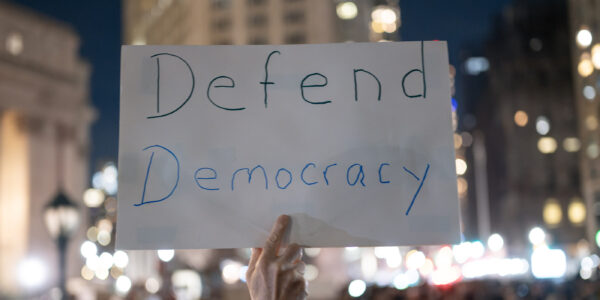
One Year In: Defending The Constitution Under A Second Trump Administration. Explore News & Commentary.One Year In: Defending the Constitution Under a Second Trump Administration
From blocking unconstitutional orders to mobilizing millions, here’s how we fought back and what comes next.