Jensen v. Thornell
What's at Stake
UPDATE: In a thorough and sweeping injunction issued on April 7, 2023, U.S. District Judge Roslyn O. Silver is requiring the Arizona Department of Corrections, Rehabilitation, and Reentry (“ADCRR”) to make “substantial” changes to staffing and conditions so that medical care and mental healthcare at Arizona prisons comes up to constitutional standards.
Summary
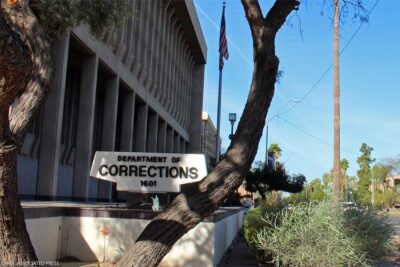
Jensen v. Thornell is a federal lawsuit challenging medical care, mental health care, and conditions in maximum custody isolation units in Arizona state prisons. The case, which previously has been called Jensen v. Shinn and Parsons v. Ryan, is a class action on behalf of all people housed in the nine (formerly ten) Arizona state prisons. The lawsuit sought only to change the policies and practices of the Arizona Department of Corrections, Rehabilitation & Reentry (ADCRR), and did not seek money damages. The case was filed in March 2012 by the Prison Law Office, the ACLU, and other lawyers.
Although the parties settled this case in October 2014, the state consistently failed to follow the terms of that settlement. So, District Court Judge Roslyn Silver rescinded (cancelled) the Court’s approval of the settlement in July 2021 and the parties went to trial in the fall of 2021.
After a fifteen-day trial, the Court issued a 200-page order on June 30, 2022, finding that ADCRR violates the constitutional rights of people in prison. The Court found that the “health care system is plainly grossly inadequate. Defendants have been aware of their failures for years and Defendants have refused to take necessary actions to remedy the failures.” The Court also found that the treatment of people in the detention units was shocking, and that the ADCRR kept “hundreds of prisoners in maximum custody housing despite all prison officials admitting there is no penological justification for doing so.” A copy of this Order should available on your tablet (at no charge) and in your law library.
On April 7, 2023, the Court issued a 57-page Order (called an Injunction) requiring the ADCRR to fix the constitutional violations. The Court has appointed four experts to serve as neutral monitors to assist the Court in monitoring ADCRR’s compliance with the Order. In addition, lawyers from the Prison Law Office, the ACLU National Prison Project and the Arizona Center for Disability Law will also be monitoring and assessing compliance. This will include making periodic visits to the state prisons.
The Court’s Order recognizes that the ADCRR’s model for providing health care was unconstitutional, and that prison officials will have to make substantial changes to deliver necessary care. Broadly speaking, the Order requires the ADCRR to provide health care that is “clinically appropriate.” (Injunction at 11.) To provide appropriate care, ADCRR will be required to, among other things:
- Address chronic staffing problems by filling all currently vacant health care positions and hiring additional health care staff, including doctors, psychiatrists, psychologists and psych associates within three months of the Order;
- Develop and implement a new sick call process, in which all people who request medical attention will see a Doctor, Nurse Practitioner or Physician’s Assistant, without being required to first see a nurse for triage;
- Identify people who are are not fluent in English, and ensure that they have adequate interpretation services for all individual and group health care encounters;
- Greatly expand their program to screen and treat people with Hepatitis C; and
- Develop and implement a comprehensive program to treat people for Opioid Use Disorder.
The Order also requires improvements to mental health care, including better coordination of care, regular face-to-face meetings with mental health workers, and improved mental health training for custody officers. It also places restrictions on prison officials placing people in isolation conditions for extended periods of time, and requires numerous changes to improve the living conditions in segregated housing units.
Judge Silver’s ruling came after a 15-day trial held in November and December 2021, where the evidence showed that incarcerated people suffered excruciating pain, permanent injuries, and preventable deaths due to the state’s failure to provide health care. The evidence presented at trial includes expert testimony regarding unconstitutional medical care, mental health care, the psychological effects of and conditions in isolation units, and health care staffing.
The class action lawsuit, formerly known as Parsons v. Ryan, was originally filed in 2012 against ADCRR, on behalf of all persons incarcerated in the state’s ten prisons. That case resulted in a 2014 court-approved settlement that was meant to protect the rights and health of incarcerated persons. The federal judges overseeing the implementation of the reforms issued numerous enforcement orders and twice found state prison officials in contempt, fining the state more than $2.5 million for their for-profit health care contractors’ failure to provide basic health care to prisoners. In July 2021, Judge Silver set aside the settlement agreement due to ADCRR’s “pervasive material breaches” of the agreement, and set the case for trial.
Legal Documents
-
02/19/2026
Jensen v. Thornell: Order Appointing Receiver
Date Filed: 02/19/2026
Affiliate: Arizona
Download Document-
02/11/2025
Jensen v. Thornell: Plaintiffs' Motion for a Receiver
Date Filed: 02/11/2025
Affiliate: Arizona
Download Document-
01/07/2025
Jensen v. Thornell: Court Monitors' Second Interim Report
Date Filed: 01/07/2025
Affiliate: Arizona
Download Document-
10/17/2024
Jensen v. Thornell: Court Monitors' Report on Five Suicides
Date Filed: 10/17/2024
Affiliate: Arizona
Download Document-
04/07/2023
Jensen v. Thornell: Order and Permanent Injunction
Date Filed: 04/07/2023
Affiliate: Arizona
Download Document-
06/30/2022
Jensen v. Shinn: Findings of Fact Post-Trial
Date Filed: 06/30/2022
Affiliate: Arizona
Download Document-
02/24/2021
Parsons v. Ryan: Contempt Order
Date Filed: 02/24/2021
Affiliate: Arizona
Download Document-
06/22/2018
Parsons v. Ryan: Order and Judgement of Civil Contempt
Date Filed: 06/22/2018
Affiliate: Arizona
Download Document-
10/10/2017
Parsons v. Ryan: Order re Civil Contempt Sanctions
Date Filed: 10/10/2017
Affiliate: Arizona
Download Document-
04/11/2016
Parsons v. Ryan: Motion to Enforce
-
04/05/2016
Parsons v. Ryan: Dr. Todd Wilcox Expert Report
Date Filed: 04/05/2016
Affiliate: Arizona
Download Document-
10/14/2014
Parsons v. Ryan: Index of Exhibits to Stipulation
Date Filed: 10/14/2014
Affiliate: Arizona
Download Document-
10/09/2014
Parsons v. Ryan: Stipulation
-
08/29/2014
Parsons v. Ryan: Dr. Pablo Stewart Expert Report
Date Filed: 08/29/2014
Affiliate: Arizona
Download Document-
08/07/2014
Parsons v. Ryan: Order Denying Defendants' Motion for Summary Judgment
Date Filed: 08/07/2014
Affiliate: Arizona
Download Document-
06/05/2014
Parsons v. Ryan: 9th Circuit Opinion
Date Filed: 06/05/2014
Affiliate: Arizona
Download DocumentPress Releases
Advocates Move to Appoint Receiver to Oversee Healthcare in Arizona Prisons
Federal Judge Issues Sweeping Remedial Order to Arizona Prison Officials
Federal Court Finds Conditions in Arizona State Prisons Unconstitutional
Judge Holds Arizona Department of Corrections in Contempt for the Second Time in Three Years
Federal Judge Holds Arizona Prison Officials in Contempt and Imposes $1.5 Million in Fines for Failing to Provide Adequate Health Care to Prisoners
Arizona Department of Corrections Facing Fines, Contempt of Court for Failure to Comply with Healthcare Settlement