More than a Dozen Wrongful Arrests Due to Police Reliance on Facial Recognition Technology
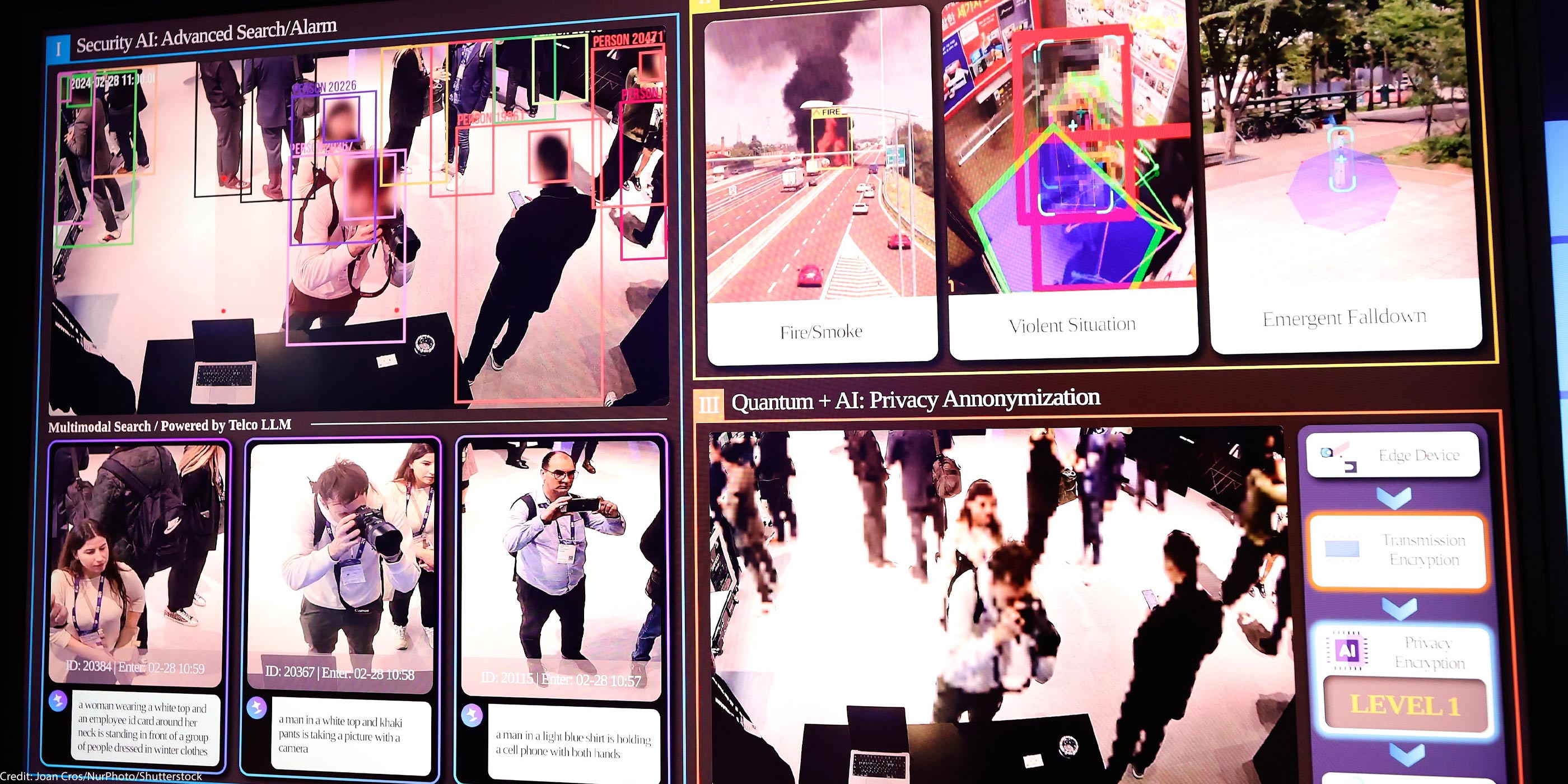
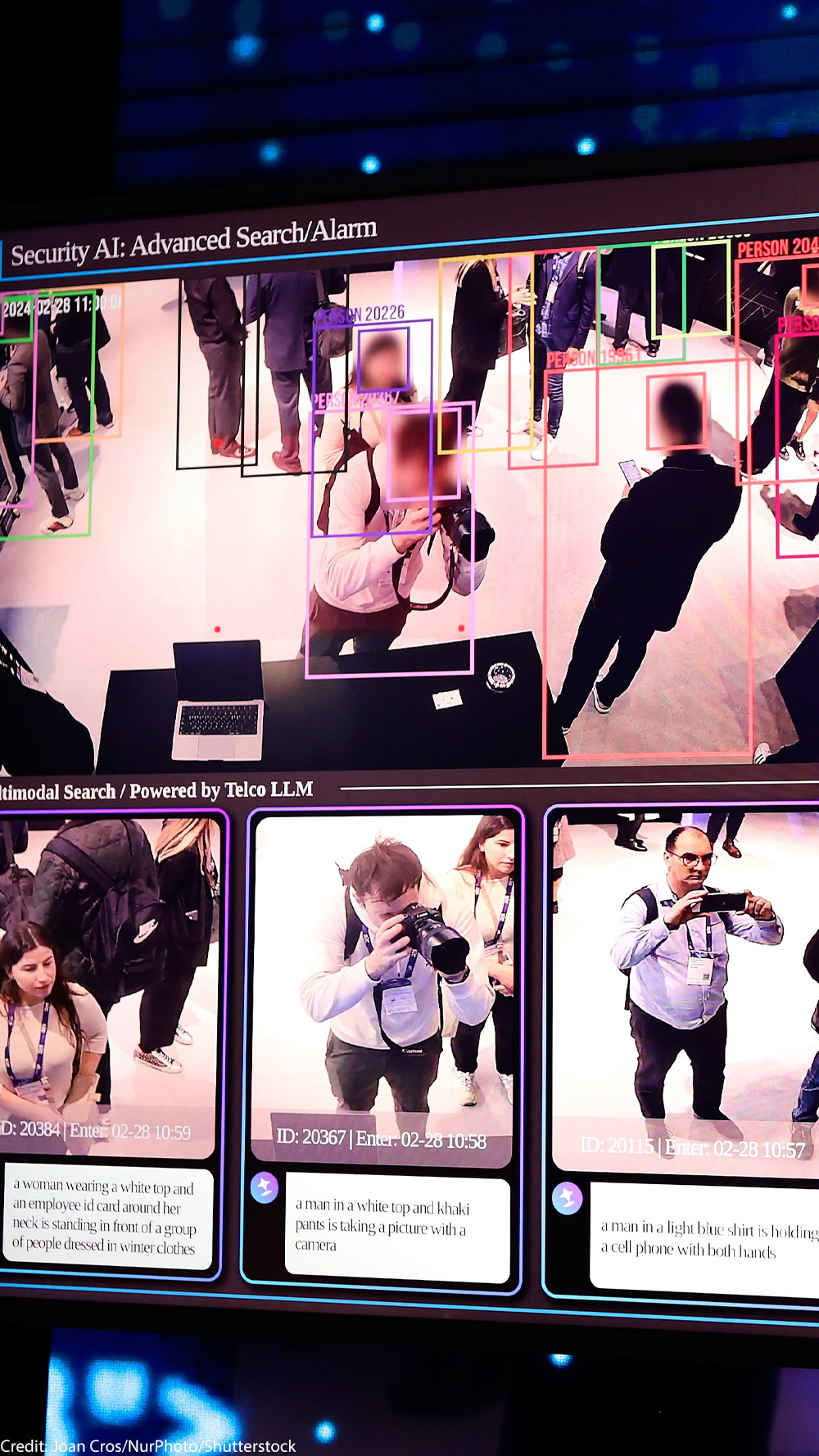
When police arrested Kimberlee Williams, a grandmother living in Oklahoma, because of a warrant from Maryland, she was shocked. She had never been to Maryland in her life.
Ms. Williams later learned that Maryland police had relied on an incorrect result from facial recognition technology that falsely flagged her as a suspect. She is the fourteenth person in the U.S. to join a growing list of people wrongfully arrested because police let flawed facial recognition technology taint their investigations.
Police use of facial recognition technology is dangerous, and stories of people wrongfully arrested because of police reliance on incorrect facial recognition results continue to surface. Today, the ACLU and ACLU of Maryland sent letters to three Maryland police departments on behalf of Ms. Williams, who was wrongfully arrested and jailed for six months because Maryland police relied on a false facial recognition result and concealed their reliance on that unreliable technology from the court when applying for an arrest warrant.
One Woman Arrested for a Crime She Didn’t Commit
On June 23, 2021, Ms. Williams was accompanying one of her daughters on a DoorDash delivery to a local military base in Lawton, Oklahoma. When base security at the entry checkpoint conducted a standard identification check, they discovered outstanding Maryland arrest warrants for Ms. Williams and detained her.
These warrants sought Ms. Williams’ arrest for a series of fraudulent over-the-counter cash withdrawals in Maryland in December 2019 and January 2020. An unknown individual had entered SunTrust and Truist bank branches in three different counties, impersonated account holders, and fraudulently withdrew thousands of dollars from those individuals’ accounts.
Ms. Williams, however, was nowhere near Maryland during this time. She was a resident of Oklahoma, living with two of her daughters and their children. While someone was defrauding banks in Maryland, Ms. Williams was in Oklahoma with her family celebrating Christmas and her daughter’s birthday.
At the bank’s headquarters, a financial crimes investigator obtained images of the suspect from security camera footage and sent an image to a national listserv of police and private investigators called Crimedex. Someone on the email list ran the image through facial recognition technology and sent back Ms. Williams’ name and photo as a purported match to the suspect.
In the first county, the bank investigator informed Montgomery County police that Ms. Williams was identified “using facial recognition software” but provided no further information, such as who ran the facial recognition search or how they conducted it. To police in the other two counties, the bank investigator provided even less information, writing that the suspect was “recognized” as Ms. Williams, “a suspect in” the previous Montgomery County investigation.
The detectives made no attempt to establish whether Ms. Williams, an Oklahoma resident, could have been anywhere near Maryland during the relevant period. Her alibi evidence, including social media posts geotagged to Oklahoma, would have shown she couldn’t be the right person. The detectives also ignored other obvious leads: one of the incidents involved a fraudulent check made payable to a name not associated with the bank accounts. Yet there was no investigation of that name. Instead, the police relied only on the facial recognition lead, plus their own visual comparisons of the photos of the suspect and Ms. Williams. They thought the two looked similar.
After she was arrested, Ms. Williams spent a total of six months in jail, first in Oklahoma waiting to be extradited, and then in Montgomery and Prince George’s counties in Maryland. When the last of the charges were finally dropped, Ms. Williams was unceremoniously released onto the street in the middle of December and left to find her way home halfway across the country. She had no phone and no money. Relying on the kindness of strangers, Ms. Williams managed to borrow a phone to contact her family and stay at a nearby hotel before she could return home.
The ordeal turned her and her family’s life upside down, and she is still trying to recover five years later. She lost her job because of the arrest. She also worries that she might unknowingly catch the attention of law enforcement again for a crime she had nothing to do with, causing another ordeal like this one.
Wrongful Arrests Due to Facial Recognition Technology Increase
What happened to Ms. Williams is outrageous and is unfortunately a predictable consequence of police using facial recognition technology. At least thirteen other people are publicly known to have been wrongfully arrested by U.S. police because of reliance on erroneous facial recognition results:
- Nijeer Parks, arrested by police in Woodbridge, New Jersey (February 2019)
- Michael Oliver, arrested by police in Detroit, Michigan (July 2019)
- Robert Williams, arrested by police in Detroit, Michigan (January 2020)
- Christopher Gatlin, arrested by police in St. Louis, Missouri (August 2021)
- Alonzo Sawyer, arrested by Maryland transit police (March 2022)
- Randal Quran Reid, arrested by Georgia police on a warrant issued in Jefferson Parish, Louisiana (November 2022)
- Porcha Woodruff, arrested by police in Detroit, Michigan (February 2023)
- Jason Killinger, arrested by police in Reno, Nevada (September 2023)
- Robert Dillion, arrested on a warrant obtained by police in Jacksonville Beach, Florida (August 2024)
- Javier Lorenzano-Nunez, arrested by police in Phoenix, Arizona (October 2024)
- Trevis Williams, arrested by police in New York City (April 2025)
- Angela Lipps, arrested by U.S. Marshals in Tennessee on a warrant obtained by police in Fargo, North Dakota (July 2025)
- Beau Burgess, arrested by police in Orlando, Florida (August 2025)
When the ACLU sued Detroit police on behalf of Robert Williams in 2021, supporters of police using facial recognition technology characterized his wrongful arrest as an unfortunate but isolated mistake that shouldn’t undermine trust in the technology. But the wrongful arrests have kept coming. It is now impossible to ignore the dangers of facial recognition technology in policing. Indeed, police keep letting the same predictable failures happen again and again.
Facial recognition technology often produces false matches. Part of what is so dangerous about these systems is that when they get it wrong, innocent people who look similar to a suspect are often flagged. That is exactly what facial recognition is designed to do — find similar faces in a database, most or all of whom aren’t actually a match. When facial recognition technology generates false matches to innocent lookalikes, it can taint the investigation by tricking witnesses and police into mistakenly believing they’ve found the suspect.
In several cases, people have been wrongfully arrested after police moved straight from facial recognition results to photo lineups presented to witnesses. When presented with photos containing an image of a person who was chosen by facial recognition technology, surrounded by filler photos who look less like the suspect, witnesses unsurprisingly think they’ve found the culprit. That tainting of lineup identifications has led to the wrongful arrests of at least seven people.
In other cases, including Ms. Williams’, the only confirmation that police obtained was a visual comparison of the suspect photo to the facial recognition result by a law enforcement officer, who was similarly influenced by the technology into thinking they had a match.
Time and time again, police have failed to conduct reliable investigation and ignored obvious reasons to question a facial recognition lead. Many of the people wrongfully arrested had visible differencesto the suspect in the photo: Michael Oliver had full tattoo sleeves, Porcha Woodruff was eight months pregnant, and Trevis Williams was eight inches taller and seventy pounds heavier. In the case leading to Nijeer Parks’ arrest, police didn’t wait for the results of DNA and fingerprint analysis that would have pointed to someone else. And for those who were arrested for crimes far from where they lived — including Kimberlee Williams, Randal Quran Reid, Robert Dillon, and Angela Lipps — police appeared to have not investigated whether they could have even been in the right city or state at the time of the crime.
Without Protections, Facial Recognition Technology Will Keep Tainting Investigations
Despite police department policies and official disclaimers warning officers that facial recognition technology results are not sufficient grounds to arrest someone, police continue letting the technology ruin their investigations. The problems don’t stop there. Multiple studies have shown that facial recognition technology produces higher false match rates for people of color, women, younger people, and the elderly. Unsurprisingly, most of the known wrongful arrests from this technology have been of Black people. But as more stories come to light, including that of Ms. Williams and other white people subjected to false arrests, we are seeing that nobody is safe from having their lives upended by this technology.
These serious dangers call for serious solutions. More than 20 cities and other jurisdictions across the country have banned police from using facial recognition technology at all. In Detroit, under a landmark settlement in Robert Williams’ wrongful arrest case, the police department no longer permits officers to request arrest warrants based on only a photo lineup combined with a facial recognition-based lead. Indiana has enacted a similar protection into state law.
Ms. Williams will never get back the six months she spent in jail for a crime she clearly had nothing to do with. In our letters to Maryland police today, we are seeking both accountability and serious policy changes to minimize the chance of this happening to anyone in the future. One wrongful arrest from this dangerous technology is an outrage. More than a dozen, and counting, is a complete travesty that lawmakers and police must take immediate action to end.
Related Issues
Related Content
-
News & CommentaryOct 2026

Privacy & Technology
$100 Million Ice “intelligence” Program Is A Domestic Secret Police Agency In The Making. Explore News & Commentary.$100 Million ICE “Intelligence” Program is a Domestic Secret Police Agency in the Making
Administration that has ordered agencies to target activists and nonprofits would hire “intelligence” agents within ICE to identify “threats” and investigate “relationships” -
News & CommentaryOct 2026

Privacy & Technology
Are Police In Your Community Laundering License Plate Data Through Federal Drug Programs Into A Secretive Central Database?. Explore News & Commentary.Are Police in Your Community Laundering License Plate Data Through Federal Drug Programs Into a Secretive Central Database?
New report suggests this is a question local communities fighting against mass surveillance should be asking their elected officials -
NevadaSep 2026
Privacy & Technology
National Security
Killinger V. Jager. Explore Case.Killinger v. Jager
On September 21, 2026, the ACLU, ACLU of Nevada and the Innocence Project filed an amicus brief in the District of Nevada in support of Jason Killinger, a man wrongfully arrested after police relied on an incorrect result from facial recognition technology. -
Press ReleaseSep 2026
Privacy & Technology
Aclu Privacy Expert To Testify At Bipartisan Senate Hearing On Flock And Other Automatic License Plate Readers. Explore Press Release.ACLU Privacy Expert to Testify at Bipartisan Senate Hearing on Flock and Other Automatic License Plate Readers
WHAT: The Senate Judiciary Subcommittee on Crime and Counterterrorism will hold a hearing on Wednesday entitled, “Always Watching: Flock’s Nationwide AI Surveillance Network.” Testifying at this hearing will be privacy and surveillance expert Chad Marlow, a senior policy counsel at the American Civil Liberties Union. Marlow will detail how automatic license plate readers (ALPRs) like Flock are used to violate our rights, discuss the growing bipartisan movement against these creepy cameras, and underscore that the best privacy protection is to ban ALPRs altogether. Marlow’s testimony comes as people across the country come together to oppose these cameras and urge their elected officials to get rid of them. The Institute for Justice has cataloged more than 200 incidents of ALPR abuse, including stalking, wrongful stops and detentions, non-law enforcement use, and other types of misconduct. Since the beginning of 2026, over 200 cities have terminated their contracts with Flock and other ALPR companies and that number keeps growing. In August, cities terminated their contracts at a rate of more than three per day. WHEN: Wednesday, September 23, 2026 at 2:30 p.m. ET WHO: Chad Marlow, Senior Policy Counsel, ACLU Benn Jordan, Cybersecurity Engineer Lindsey Isaacs, Wrongfully Accused Driver Alasdair Whitney, Legislative Counsel, Institute for Justice The Honorable Ross Teeple, Sheriff for Pinal County WHERE: Dirksen Senate Office Building Room 562 *Livestream can be found here. Chad will be available for questions and interviews following the hearing. Please reach out to Allegra Harpootlian with any requests.