ACLU Leads Fight to Limit Overbroad Digital Search Warrants
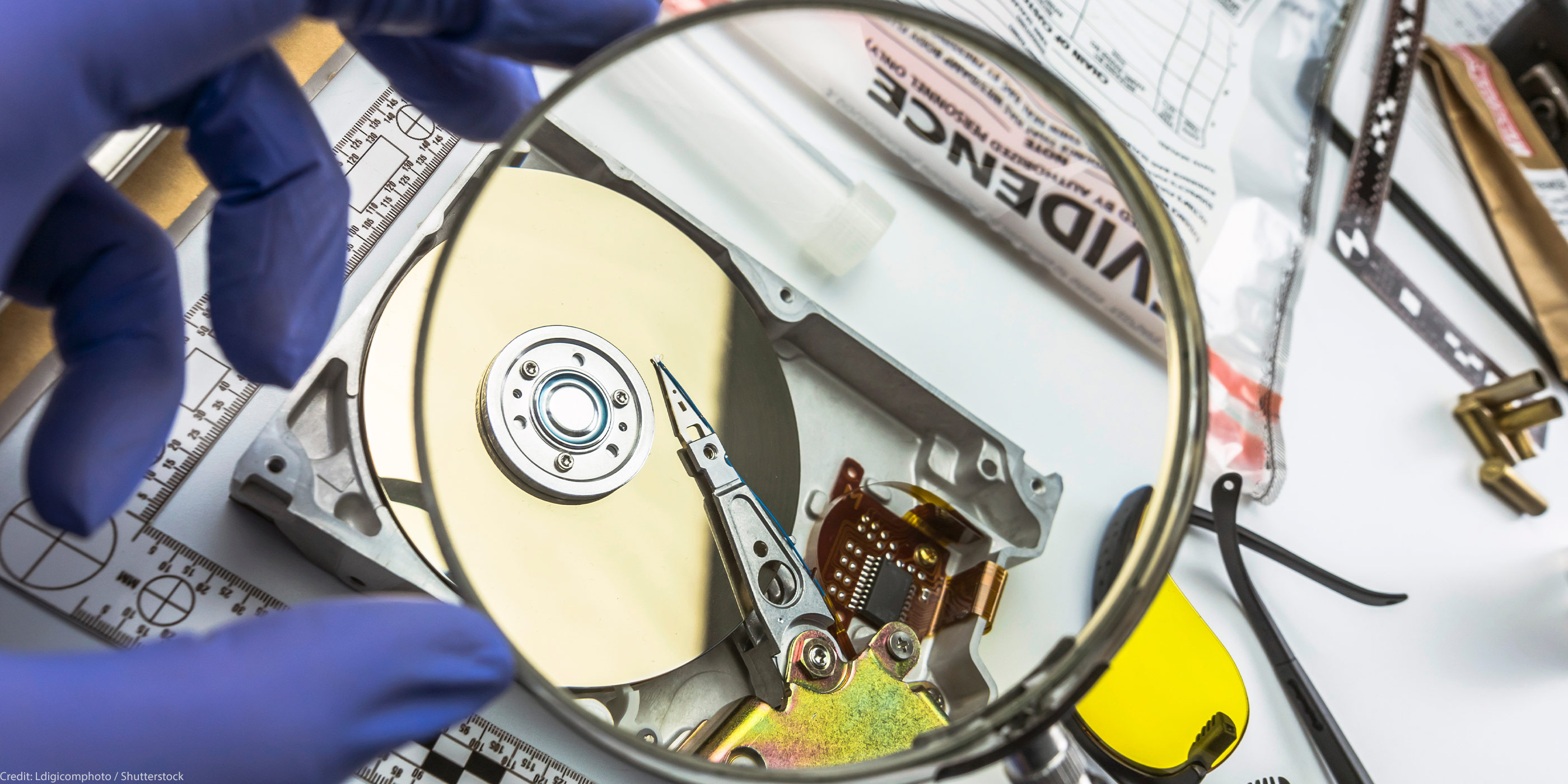
EDITOR’S NOTE: Jennifer Granick is a leading civil liberties lawyer and scholar. For over eight years, she served as surveillance and cybersecurity counsel for the ACLU, where she litigated and advocated for constitutional rights in the digital age.
As a surveillance and cybersecurity counsel for the ACLU, I spearheaded an ACLU project beginning in 2020 to strengthen warrants in the digital age, so that law enforcement does not conduct overbroad searches of our cell phones, computers, and other devices. I traveled the country talking to judges and criminal defense lawyers about warrants and how they should be tailored to protect all of our constitutional rights. These efforts are paying off.
Warrants are supposed to protect people from suspicionless searches and restrain police from rummaging through private information.
Over the last decade and a half, in response to new technology’s impact on privacy, civil libertarians and criminal defense attorneys have litigated, and won, a series of cases that expanded the Fourth Amendment’s warrant requirement to new surveillance techniques and searches of electronic data. The Fourth Amendment to the Constitution protects our right to live free of “unreasonable searches and seizures.” Warrants are supposed to protect people from suspicionless searches and restrain police from rummaging through private information. Today, the Supreme Court has made clear in a series of decisions that the Fourth Amendment warrant requirement applies to tracking cars with surreptitiously installed GPS devices, searching arrestees’ cell phones, and obtaining more than a few days of historical cell phone data.
Privacy & Technology
National Security
The Warrant Clause in the Digital Age
But for a warrant requirement to be meaningful, warrants have to actually protect privacy in practice. In the wake of those important Supreme Court decisions, that’s not what we saw happening. What we saw was law enforcement routinely getting warrants to seize exceedingly personal cell phone and social media information, regardless of whether it would likely contain evidence of the crime. Every suspect, of any crime, was getting their phone or social media account data seized. Police were then searching all of the stored information in a quest to find evidence of any potential crimes, not just for information they were actually justified in obtaining. Such overbroad warrants could be used to retaliate against and surveil protestors, political opponents, and the phone owner’s friends and family.
For example, in 2021, Colorado Springs police arrested a protestor connected to an activist organization. They had been spying on the organization for years. Using the arrest as an excuse, they obtained an overbroad warrant that allowed them to conduct a fishing expedition through all of the arrestee’s devices for generic terms like “cop,” “protest,” “human,” and “rights,” clearly seeking to expand their unjustified efforts to spy on the activists. These searches went beyond looking for evidence related to the arrest, authorized police to look for evidence other than that related to the specific crime, did not include a date-range limitation, and allowed officers essentially unlimited discretion in executing the search. Such warrants violate the Fourth Amendment. The ACLU of Colorado filed a successful lawsuit challenging this overbroad warrant.
The ACLU, other organizations, the criminal defense and plaintiff’s bar, and members of the public all have a critical role to play in making warrants for digital data meaningful.
Other courts have ruled that similar warrants were also too lenient and failed to protect the rights of people who were charged with crimes. But the problem goes well beyond that. When warrants are weak, a lot of other people are caught up in the dragnet. People who are searched but not charged with crimes, who innocently communicate with suspects, or who appear in photos with them, have their private matters revealed to the government. And they essentially have no recourse, especially because it is extremely difficult and expensive to sue the government. That makes it even more important that, up front, we make sure warrants do their job of narrowly tailoring searches to the justification for the investigation.
Since the inception of this project, we’ve filed a dozen friend-of-the-court briefs in cases around the country, and we’ve supported defense attorneys in their motions to suppress evidence from overbroad searches. In so many of these cases, courts agreed with us and set a positive precedent. The Tenth Circuit, and the Supreme Courts of Connecticut, Michigan, Oregon, and many more, adopted our point of view. We’ve also continued to update our white paper that launched this whole project, creating an extensive appendix with amicus briefs filed by the ACLU in digital age warrant-related cases, useful court opinions in cases where our arguments prevailed, and other resources that help lawyers win cases reinforcing the need for strict and narrowly-tailored warrants. And it’s working. Arguments developed in the white paper are getting adopted by courts around the country.
There’s real momentum in the effort to ensure that the Fourth Amendment applies to all kinds of novel surveillance techniques and that its warrant requirement will actually protect the privacy rights of all of us. The ACLU, other organizations, the criminal defense and plaintiff’s bar, and members of the public all have a critical role to play in making warrants for digital data meaningful.
Related Issues
Related Content
-
News & CommentaryOct 2026

Privacy & Technology
$100 Million Ice “intelligence” Program Is A Domestic Secret Police Agency In The Making. Explore News & Commentary.$100 Million ICE “Intelligence” Program is a Domestic Secret Police Agency in the Making
Administration that has ordered agencies to target activists and nonprofits would hire “intelligence” agents within ICE to identify “threats” and investigate “relationships” -
News & CommentaryOct 2026

Privacy & Technology
Are Police In Your Community Laundering License Plate Data Through Federal Drug Programs Into A Secretive Central Database?. Explore News & Commentary.Are Police in Your Community Laundering License Plate Data Through Federal Drug Programs Into a Secretive Central Database?
New report suggests this is a question local communities fighting against mass surveillance should be asking their elected officials -
NevadaSep 2026

Privacy & Technology
National Security
Killinger V. Jager. Explore Case.Killinger v. Jager
On September 21, 2026, the ACLU, ACLU of Nevada and the Innocence Project filed an amicus brief in the District of Nevada in support of Jason Killinger, a man wrongfully arrested after police relied on an incorrect result from facial recognition technology. -
Press ReleaseSep 2026

Privacy & Technology
Aclu Privacy Expert To Testify At Bipartisan Senate Hearing On Flock And Other Automatic License Plate Readers. Explore Press Release.ACLU Privacy Expert to Testify at Bipartisan Senate Hearing on Flock and Other Automatic License Plate Readers
WHAT: The Senate Judiciary Subcommittee on Crime and Counterterrorism will hold a hearing on Wednesday entitled, “Always Watching: Flock’s Nationwide AI Surveillance Network.” Testifying at this hearing will be privacy and surveillance expert Chad Marlow, a senior policy counsel at the American Civil Liberties Union. Marlow will detail how automatic license plate readers (ALPRs) like Flock are used to violate our rights, discuss the growing bipartisan movement against these creepy cameras, and underscore that the best privacy protection is to ban ALPRs altogether. Marlow’s testimony comes as people across the country come together to oppose these cameras and urge their elected officials to get rid of them. The Institute for Justice has cataloged more than 200 incidents of ALPR abuse, including stalking, wrongful stops and detentions, non-law enforcement use, and other types of misconduct. Since the beginning of 2026, over 200 cities have terminated their contracts with Flock and other ALPR companies and that number keeps growing. In August, cities terminated their contracts at a rate of more than three per day. WHEN: Wednesday, September 23, 2026 at 2:30 p.m. ET WHO: Chad Marlow, Senior Policy Counsel, ACLU Benn Jordan, Cybersecurity Engineer Lindsey Isaacs, Wrongfully Accused Driver Alasdair Whitney, Legislative Counsel, Institute for Justice The Honorable Ross Teeple, Sheriff for Pinal County WHERE: Dirksen Senate Office Building Room 562 *Livestream can be found here. Chad will be available for questions and interviews following the hearing. Please reach out to Allegra Harpootlian with any requests.